I fully understand the nostalgia for real ownership of physical-media games. I grew up on cassette tapes (C64 + Amstrad 464!), floppy disks (C64 5-1/4" then Amiga 3-1/2"), cartridges, and CDs. I occasionally envy the retro gamers on YouTube with an entire wall full of such physical media. But do you know what I like more than collecting? Playing! Anywhere. Anything. Anytime.
We went through the same coping phases with movies and music. Yes, vinyl had a resurgence, but it's still a tiny sliver of hours listened. Same too with 4K Blue-rays. Almost everyone just listens to Spotify or watches on Netflix these days. It's simply cheaper, faster, and, thus, better.
Not "better" in some abstract philosophical way (ownership vs rent) or even in a concrete technical way (bit rates), but in a practical way. Paying $20/month for unlimited music and the same again for a broad selection of shows and movies is clearly a deal most consumers are happy to make.
So why not video games? Well, because it just wasn't good enough! Netflix tried for casual gaming, but I didn't hear much of that after the announcement. Google Stadia appears to have been just a few years ahead of reality (eerie how often that happens for big G, like with both AI and AR!) as they shut down their service already.
NVIDIA, though, kept working, and its GeForce NOW service is actually, finally kinda amazing! I had tried it back in the late 2010s, and just didn't see anything worth using back then. Maybe my internet was too slow, maybe the service just wasn't good enough yet. But then I tried it again a few days ago, just after NVIDIA shipped the native GFN client for Linux, and holy smokes!!
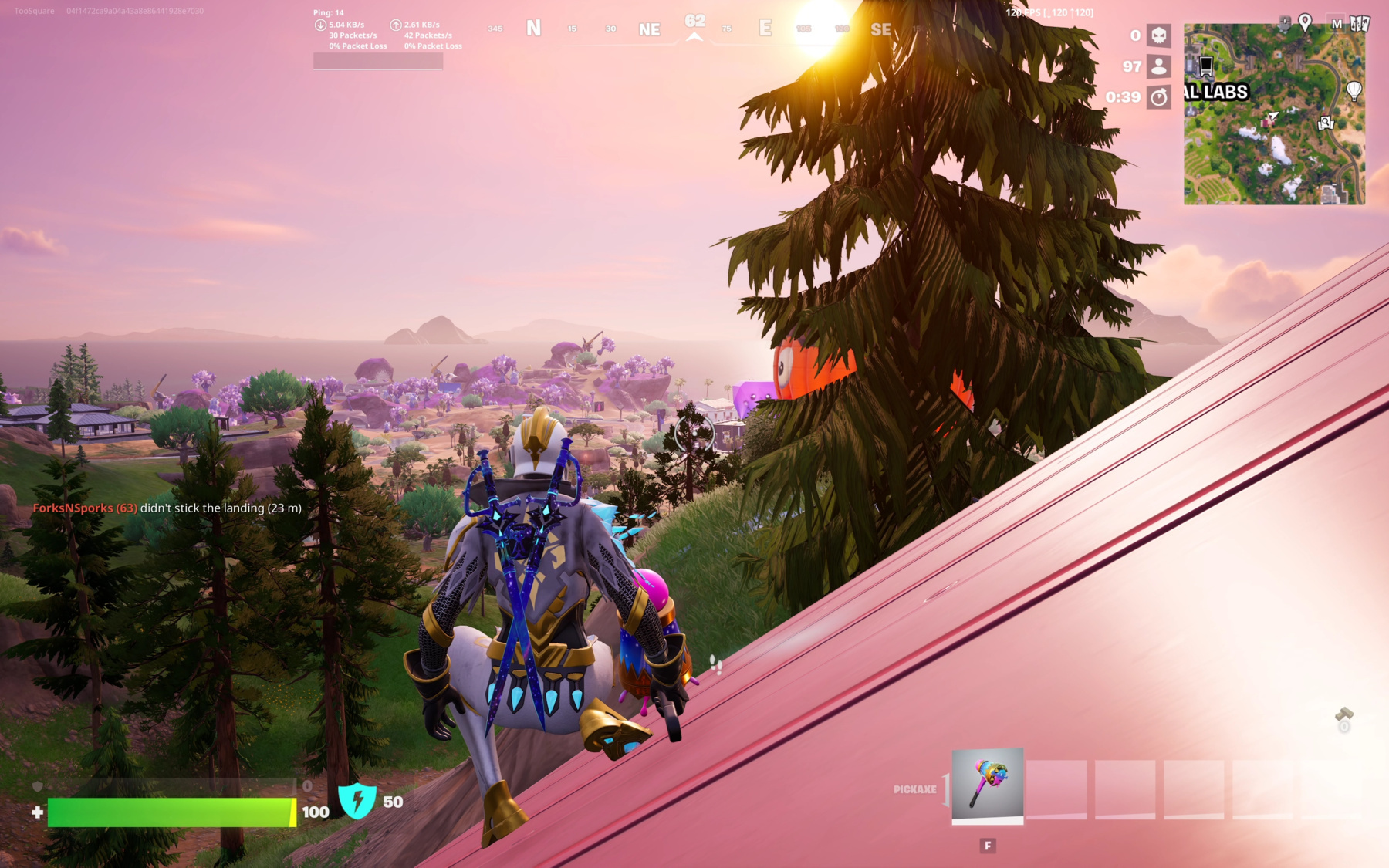
You can legitimately play Fortnite in 2880x1800 at 120 fps through a remote 4080, and it looks incredible. Yes, there's a little input lag, but it's shockingly, surprisingly playable on a good internet connection. And that's with the hardest possible genre: competitive shooters! If you play racing games like Forza Horizon or story-mode games like Warhammer 40K: Space Marine 2, you can barely tell!
This is obviously a great option for anyone with a modest computer that can't run the latest triple-A titles, but also for Linux gamers who don't have access to run the cheat-protection software required for Fortnite and a few other games.
And, like Spotify and Netflix, it's pretty competitively priced. It's $20/month for access to that 4080-tier. You'd quickly spend $2,000+ on a gaming rig with a 4080, so this isn't a half bad deal: it's a payback of 100 months, and by then you'd probably want a 6080 anyway. Funny how NVIDIA is better at offering the promise of cheap cloud costs than the likes of AWS!
Anyway, I've been very impressed with NVIDIA GeForce NOW. We're going to bake the Linux installer straight into the next version of Omarchy, so you can just go to Install > Gaming > NVIDIA GeForce NOW to get going (just like we have such options for Steam and Minecraft).
But of course seeing Fortnite running in full graphics on that remote 4080 made me hungry for even more. I've been playing Fortnite every week for the last five years or so with the kids, but the majority of my gameplay has actually been on tablet. A high-end tablet, like an iPad M5, can play the game with good-for-mobile graphics at 120 Hz. It's smooth, it's easy, and the kids and I can lounge on the couch and play together. Good Family Fun! Not peak visual fidelity, though.
So after the NVIDIA GeForce NOW experience, I found a way to use the same amazing game streaming technology at home through a local-server solution called Apollo and a client called Moonlight. This allowed me to turn my racing-sim PC that's stuck downstairs into a cloud-like remote gaming service that I can access anywhere on the local network, so I can borrow its 4090 to play 120-fps, ultra-settings Fortnite with zero perceivable input lag on any computer in the house.
The NVIDIA cloud streaming is very impressive, but the local-server version of the same is mind-blowing. I'm mostly using the Asus G14 laptop as a client, so Fortnite looks incredible with those ultra, high-resolution settings on its OLED, but unlike when you use that laptop's built-in graphics card, the machine stays perfectly cool and silent pulling a meager 18 watts. And the graphics are of course a lot nicer.
The Moonlight client is available for virtually every platform: Mac, iOS, Android, and of course Linux. That means no need to dual boot to enjoy the best games at the highest fidelity. No need for a honking big PC on my primary desk. I did not know this was an option!!
Whether you give NVIDIA's cloud gaming setup a try or repurpose a local gaming PC for the same, you're in for a real treat of what's possible with streaming Fortnite on ultra settings at 120 fps on Linux (or even Mac!). GG, NVIDIA!
At the end of last year, AI agents really came alive for me. Partly because the models got better, but more so because we gave them the tools to take their capacity beyond pure reasoning. Now coding agents are controlling the terminal, running tests to validate their work, searching the web for documentation, and using web services with skills we taught them in plain English. Reality is fast catching the hype!
This is all very evident if you've tried to employ any of the new models — especially Claude Opus 4.5, Codex 5, Gemini 3, and even the Chinese open-weight models like MiniMax M2.1 and GLM-4.7 — in one of the modern terminal harnesses that give them access to all these autonomous powers. The code being produced by this new breed of AI is leagues ahead of where their predecessors were at the beginning of 2025.
I've thoroughly enjoyed putting them all to work in OpenCode, which is a terminal interface for coding agents that allows you to seamlessly switch between all of the models, capture your sessions for sharing, and simply looks astounding when theme-matched with the rest of Omarchy (where we're making it a default in the next version!).
See, I never really cared much for the in-editor experience of having AI autocomplete your code as you were writing it. That was the original format pioneered by GitHub's Copilot and Cursor, but it left me cold. When I code, I want to finish my own thoughts and sentences. That was the sentiment I expressed on the Lex Fridman podcast last summer.
But with these autonomous agents, the experience is very different. It's more like working on a team and less like working with an overly-zealous pair programmer who can't stop stealing the keyboard to complete the code you were in the middle of writing. With a team of agents, they're doing their work autonomously, and I just review the final outcome, offer guidance when asked, and marvel at how this is possible at all.
Yes, I'm ready to give the current crop of AI agents a promotion. They're no longer just here to help me learn, answer my questions, or check my work. They're fully capable of producing production-grade contributions to real-life code bases.
Yet pure vibe coding remains an aspirational dream for professional work for me, for now. Supervised collaboration, though, is here today. I've worked alongside agents to fix small bugs, finish substantial features, and get several drafts on major new initiatives. The paradigm shift finally feels real.
Now, it all depends on what you're working on, and what your expectations are. The hype train keeps accelerating, and if you bought the pitch that we're five minutes away from putting all professional programmers out of a job, you'll be disappointed.
I'm nowhere close to the claims of having agents write 90%+ of the code, as I see some boast about online. I don't know what code they're writing to hit those rates, but that's way off what I'm able to achieve, if I hold the line on quality and cohesion.
But I'll forgive folks for getting excited! Because you don't have to connect many future dots on the current trend line to get dizzy by the prospects. The leaps of improvement that AI agents took in 2025 is simply incredible. This is the most exciting thing we've made computers do since we connected them to the internet back in the '90s. So what might things look like in 2026 or 2027? I get the exuberance.
I also get that some programmers are eager to tune it all out. The hype drones on relentlessly, the most fantastical claims are still far off from being substantiated, and there's real uncertainty about where all this will leave the profession in the future. But that's still not reason enough to miss out on this incredible moment in human and computing history!
You gotta get in there. See where we're at now for yourself. Download OpenCode, throw some real work at Opus or the others, and relish the privilege of being alive during the days we taught the machines how to think.
One of my favorite parts of the early web was how easy it was to see how the front-end was built. Before View Source was ruined by minification, transpiling, and bundling, you really could just right-click on any web page and learn how it was all done. It was glorious.
But even back then, this only ever applied to the front-end. At least with commercial applications, the back-end was always kept proprietary. So learning how to write great web applications still meant piecing together lessons from books, tutorials, and hello-world-style code examples, not from production-grade commercial software.
The O'Saasy License seeks to remedy that. It's basically the do-whatever-you-want MIT license, but with the commercial rights to run the software as a service (SaaS) reserved for the copyright holder, thus encouraging more code to be open source while allowing the original creators to see a return on their investment.
We need more production-grade code to teach juniors and LLMs alike. A view source that extends to the back-end along with the open source invitation to fix bugs, propose features, and run the system yourself for free (if your data requirements or interests maks that a sensible choice over SaaS).
This is what we're doing with Fizzy, but now we've also given the O'Saasy License a home to call its own at osaasy.dev. The license is yours to download and apply to any project where it makes sense. I hope to read a lot more production-grade SaaS code as a result!
The gap between Europe's self-image and reality has grown into a chasm of delulu. One that's threatening to swallow the continent's future whole, as dangerous dependencies on others for energy, security, software, and manufacturing stack up to strangle Europe's sovereignty. But its current political class continues to double down on everything that hasn't worked for the past forty years.
But you can see why many politicians in Europe are eager to punish X for giving Europeans a social media that doesn't cooperate with its crackdown on wrongthink. The German chancellor, Friedrich Merz, is personally responsible for 5,000(!!) cases pursuing his subjects for insults online, which has led to house raids for utterances as banal as calling him a "filthy drunk".
It's against this backdrop — thousands of yearly arrests for banal insults or crass opposition to government policies — that some Europeans still try to convince themselves they're the true champions of free speech and freedom of the press. Delulu indeed.
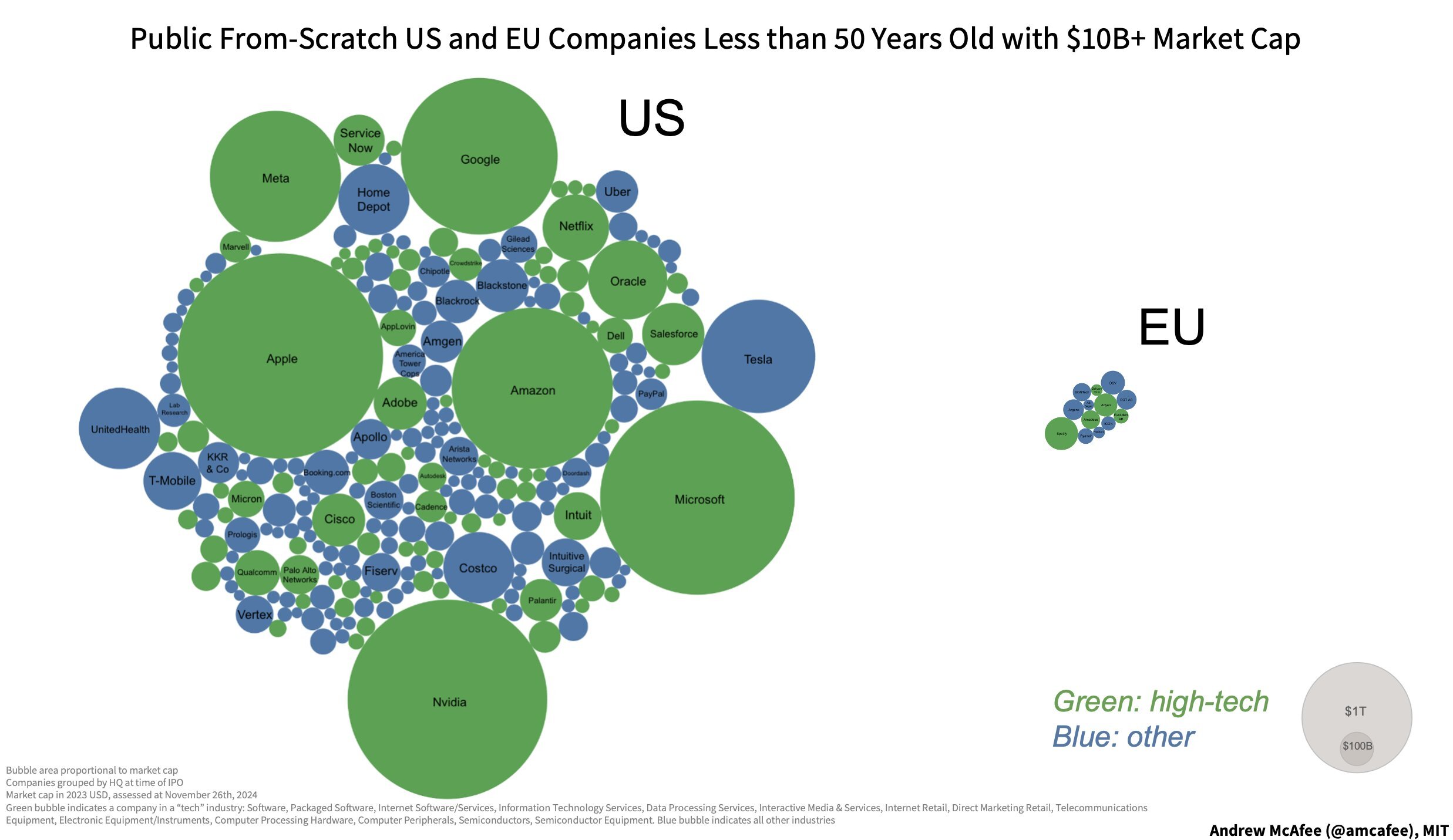
That's primarily because Europe basically stopped creating new, large companies more than half a century ago. So as the likes of Nokia died off, there was nobody new to replace them. In the last fifty years, the number and size of new European companies worth $10 billion or more is alarmingly small:
So cue the talk about security. European leaders are incensed by getting excluded from the discussion about ending the war in Ukraine, which is currently just happening between America and Russia directly. But they only have themselves to thank for a seat on the sidelines. Here's a breakdown of the NATO spending by country:
This used to be a joke to Europeans. That America would spend so much on its military might. Since the invasion of Ukraine, there's been a lot less laughing, and now the new official NATO target for member states is to spend 5% of GDP on defense.
But even this target fails to acknowledge the fact that even if European countries should meet their new obligations (and currently only Poland among the larger EU countries is even close), they'd still lag far behind America, simply because the EU is comparatively a much smaller and shrinking economic zone.
In 2025, the combined GDP for the European Union was $20 trillion. America was fifty percent larger with a GDP of $30 trillion. And the gap continues to widen, as EU growth is pegged at around 1% in 2024 compared to almost 3% for the US.
Now this is usually when the euro cope begins to screech the loudest. Trying every which way to explain that actually Europe is a better place to live than America, despite having a GDP per capita that's almost half.
And on a subjective level, that might well be true! There are plenty of reasons to prefer living in Europe, but that doesn't offset the fact that America is simply a vastly richer country, and that matters when it comes to everything from commercial dominance to military power.
But it's the trajectory that's most damning. In 2008, Europe was on near-parity in GDP with America! But if the 1% vs 3% growth-rate disparity continues for another decade, America will grow its economy by another third to $40 trillion, while Europe will grow just 10% to $22 trillion. Making the American economy nearly twice as large as the European one. Yikes.
These should all be sobering numbers to any European. Whether it's the 10,000 yearly arrests in the UK for social media posts or the risk of an economy that's half the size of the American one in a decade.
But Europe isn't doomed to fulfill this tragic destiny. It's full of some of the most creative, capable, and ambitious people in the world (like the fifth of US startup unicorns with European founders!). But they need much better reasons to stay than what the EU (and now a separate UK) is currently giving them.
Like drastically lower energy costs to for a competitive industrial base and to power the AI revolution, so best we quickly revive European nuclear ambitions. Like an immigration policy designed to rival America's cherry-picking of the world's best, rather than mass immigration from low-average-IQ regions of net-negative contributors to the economy (and society). Like dropping the censorship ambitions and bureaucratic boondoggles like the DSA. Like actually offering a European internal market for remote labor and a unified stock exchange for listings.
There are plenty of paths to take that do not end in a low-growth, censorious regime that continues to export many of its best brains to America and elsewhere. So: make haste, the shadows lengthen.
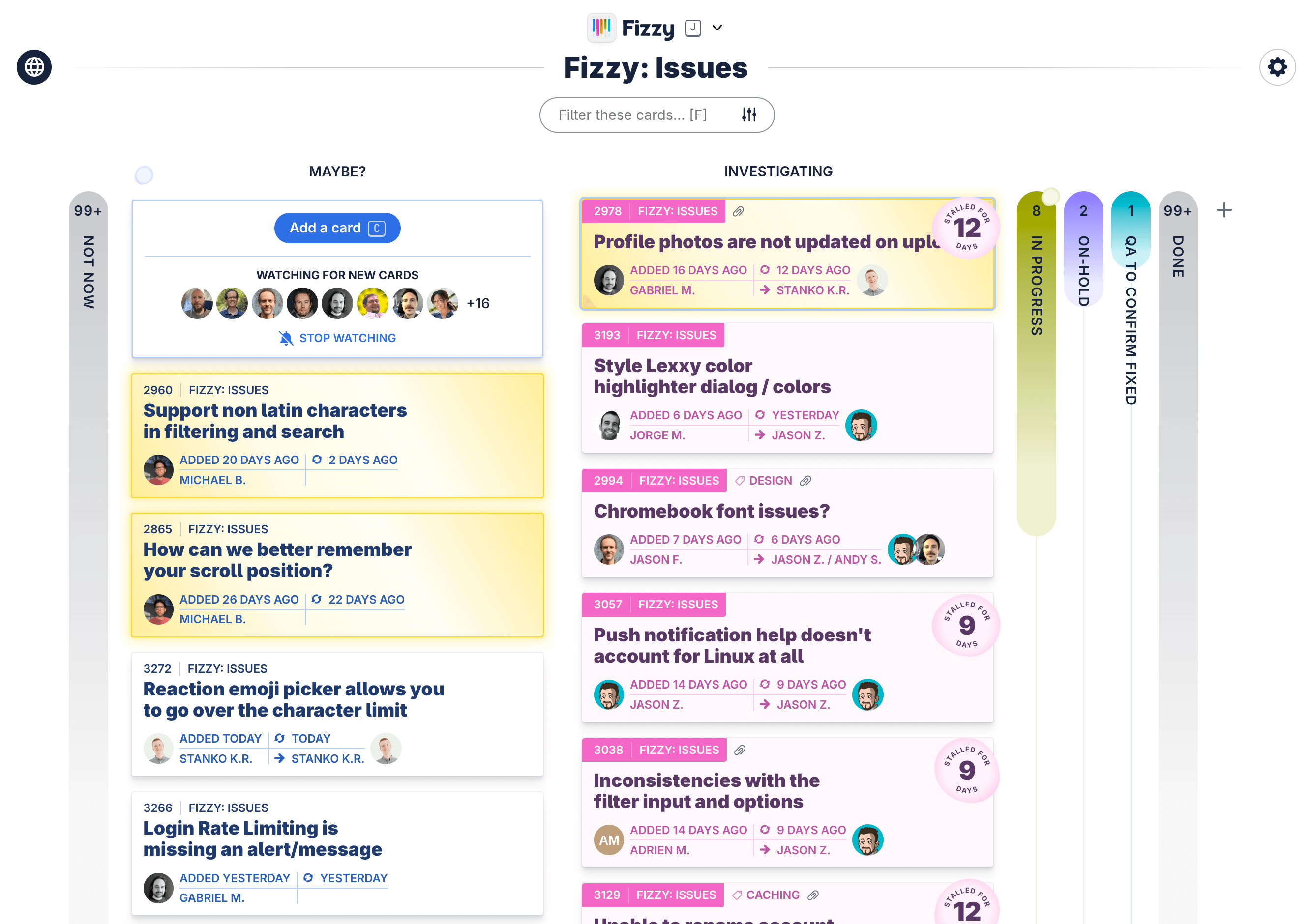
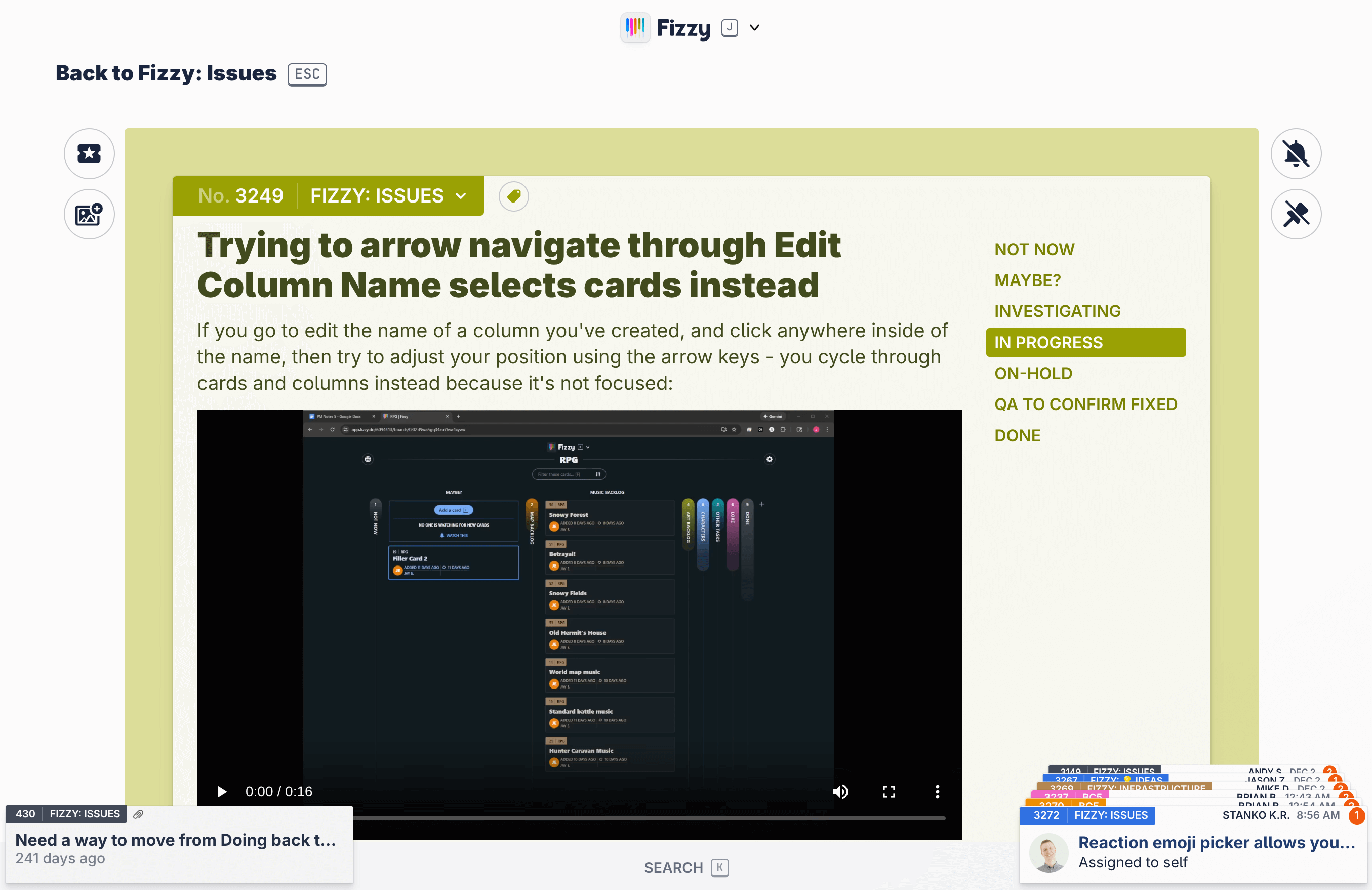
Kanban is a simple, practical approach to visually managing processes and backlogs by moving work cards from one progress column to another. Toyota came up with it to track their production lines back in the middle of the 20th century, but it's since been applied to all sorts of industries with great effect. And Fizzy is our new fun, modern take on it in digital form.
We're certainly not the first to take a swing at this, not even for software development. Since the early 2000s, there's been a movement to use the Kanban concept to track bugs, issues, and ideas in our industry. And countless attempts to digitize the concept over the years.
But as with so much other software, good ideas can grow cumbersome and unwieldy surprisingly quickly. Fizzy is a fresh reset of an old idea.
We need more of that.
Very little software is ever the final word on solving interesting problems. Even products that start out with great promise and simplicity tend to accumulate cruft and complexity over time. A healthy ecosystem needs a recurring cycle of renewal.
We've taken this mission to heart not just with Fizzy's fun, colorful, and modern implementation of the Kanban concept, but also in its distribution.
Fizzy is available as a service we run where you get 1,000 cards for free, and then it's $20/month for unlimited usage. But we're also giving you access to the entire code base, and invite enterprising individuals and companies to run their own instance totally free of charge.
This is done under the O'Saasy License, which is basically the do-whatever-you-want-just-don't-sue MIT License, but with a carve-out that reserves the commercialization rights to run Fizzy as SaaS for us as the creators. That means it's not technically Open Source™, but the source sure is open, and you can find it on our public GitHub repository.
That open source is what we run too. So new features or bugs fixes accepted on GitHub will make it into both our Fizzy SaaS offering and what anyone can run on their own hardware. We've already had a handful of contributions go live like this!
Ultimately, it's our plan to let data flow freely between the SaaS and the local installations. You'll be able to start an account on your own instance, and then, if you'd rather we just run it for you, take that data with you into the managed setup. Or the other way around!
In an age where SaaS companies come and go, pivot one way or the other, I think it's a great reassurance that the source code is freely available, and that any work put into a SaaS account is portable to your own installation later.
I'm also just a huge fan of being able to View Source. Traditionally, that's been reserved to the front end (and even that has been disappearing due to the scourge of minimization, transpiling, and bundling), but I'm usually even more interested in seeing how things are built on the backend. Fizzy allows you full introspection into that. Including the entire history of how the product was built, pull request by pull request. It's a great way to learn how modern Rails applications are put together!
So please give Fizzy a spin. Whether you're working on software, with a need to track those bugs and feature requests, or you're in an entirely different business and need a place for your particular issues and ideas. Fizzy is a fresh, fun way to manage it all, Kanban style. Enjoy!
Black Friday is usually when ecommerce sets new records. This has certainly been true for Shopify through most of its existence. So much so that the company spends months in advance preparing for The Big Day(s). You'd think after more than twenty years, though, that things would have leveled out. But you'd be wrong.
This year, merchants sold an astounding $6.2 billion worth of wares through Shopify on Black Friday. That's up 25% from last year, when the record was ~$5 billion. Just crazy high growth on a crazy big base. The law of big numbers clearly hasn't found a way to apply itself here yet!
That volume of orders means the Shopify monolith gets put through its paces. The backend API peaked at 31 million requests per minute. The databases carried 53 million reads and 2 million writes per second. Bonkers.
Rarely do the stars align to shine so brightly that a single company is stewarded by a still-active programmer with a stellar pedigree of core contributions, saddled with such unceasing success, faced with a constant barrage of novel technical challenges, and willing to contribute everything they learn and build back into the open-source base pillars. But that's Shopify.
Ultimately, this is all downstream from being a founder-led business. Tobi Lütke not only served on the Rails core team in the early days, but continues to steer the Shopify ship with a programmer's eye for detail and exploration. The latest release of Omarchy even features his new Try tool. How many CEOs of companies worth two hundred billion dollars still program like that?
Despite all this, there's occasionally still some fringe consternation in the Ruby world about Shopify's dominance. In Rails, Shopify employs almost half the core contributors. In Ruby, they have several people on the core team too. Seeing this as anything but a blessing is silly, though.
We wouldn't have such battle-tested releases of Rails without Shopify running production on the framework's edge. We wouldn't have gotten YJIT without the years of effort they sunk into improving Ruby's core performance. And we wouldn't have seen the recent production-proving of Ractors without them either. Any programming community should be so lucky as to have a Shopify!
Now I'm obviously biased here. Not only have I been friends with Tobi for over twenty years, but I also serve on the board of directors for the company. I'm both socially and economically incentivized to cheer for this extraordinary company. But that doesn't mean it isn't all true too!
Shopify is indeed the patron saint of Ruby on Rails. Its infrastructure team is the backbone of our ecosystem, and its continued success the best case study of how far you can take this framework and language. They deserve a gawd damn parade for all they do.
So on this Cyber Monday, I say cheers to Tobi, cheers to the thousands of Shopifolk. You're killing it for merchants, shoppers, and all of us working with Ruby on Rails. Bravo.
It's pretty incredible that we're able to run all these awesome AI models on our own hardware now. From downscaled versions of DeepSeek to gpt-oss-20b, there are many options for many types of computers. But let's get real here: they're all vastly behind the frontier models available for rent, and thus for most developers a curiosity at best.
This doesn't take anything away from the technical accomplishment. It doesn't take anything away from the fact that small models are improving, and that maybe one day they'll indeed be good enough for developers to rely on them in their daily work.
But that day is not today.
Thus, I find it spurious to hear developers evaluate their next computer on the prospect of how well it's capable of running local models. Because they all suck! Whether one sucks a little less than the other doesn't really matter. And as soon as you discover this, you'll be back to using the rented models for the vast majority of the work you're doing.
This is actually great news! It means you really don't need a 128GB VRAM computer on your desk. Which should come as a relief now that RAM prices are skyrocketing, exactly because of AI's insatiable demand for more resources. Most developers these days can get by with very little, especially if they're running Linux.
So as an experiment, I've parked my lovely $2,000 Framework Desktop for a while. It's an incredible machine, but in the day-to-day, I've actually found I barely notice the difference compared to a $500 mini PC from Beelink (or Minisforum).
I bet you likely need way less than you think too.
I haven't done a full-system backup since back in the olden days before Dropbox and Git. Every machine I now own is treated as a stateless, disposable unit that can be stolen, lost, or corrupted without consequences. The combination of full-disk encryption and distributed copies of all important data means there's just no stress if anything bad happens to the computer.
But don't mistake this for just a "everything is in the cloud" argument. Yes, I use Dropbox and GitHub to hold all the data that I care about, but the beauty of these systems is that they work with local copies of that data, so with a couple of computers here and there, I always have a recent version of everything, in case either syncing service should go offline (or away!).
The trick to making this regime work is to stick with it. This is especially true for Dropbox. It's where everything of importance needs to go: documents, images, whatever. And it's instantly distributed on all the machines I run. Everything outside of Dropbox is essentially treated as a temporary directory that's fully disposable.
It's from this principle that I built Omarchy too. Given that I already had a way to restore all data and code onto a new machine in no time at all, it seemed so unreasonable that the configuration needed for a fully functional system still took hours on end. Now it's all encoded in an ISO setup that installs in two minutes on a fast computer.
Now it's true that this method relies on both multiple computers and a fast internet connection. If you're stuck on a rock in the middle of nowhere, and you somehow haven't discovered the glory of Starlink, maybe just stick to your old full-disk backup ways. But if you live in the modern world, there ought to be no reason why a busted computer is a calamity of data loss or a long restore process.
The only way many tech workers in the US can get a long break is by quitting their job. So lots of them do that every few years, which is partly why the average tenure in our industry is at an atrocious 18 months. But this terrible rate of churn is often avoidable by one simple benefit trick: Sabbaticals.
We've been giving everyone at 37signals a six-week sabbatical every three years for the last fifteen years or so. It's been magical for retention because a break like that allows the mind to reset in a way a two-week vacation never could. And when employees yearn for such a reset, the typical option is usually just to quit.
I know the idea of a six-week sabbatical might sound strange to many Europeans who'd be forgiven for thinking "isn't that just August"? And they're not exactly wrong. Europeans usually do enjoy more vacation time, but in the tech industry, that also comes with much lower pay. Easily half to two-thirds less.
I think it's entirely possible to have it both ways: Work for an American tech company with American pay levels, but also enjoy a regular full reset, without having to quit to get it.
And the argument for the boss doesn't even have to be some humanistic plea about long-term happiness. It can simply be about retention: it's very expensive to see smart, trained people walk out the door.
I'd even argue that bosses — be they founders or professional executives — benefit just as much from a regular sabbatical like anyone else. Whenever Jason or I have taken one, we've always come back with fresh ideas and perspectives that invariably lead to positive changes or new ambitions that wouldn't have come otherwise.
Six weeks is also just long enough to remind tired founders that selling their company isn't likely to be the bliss they imagine. That mojito island gets boring quickly. That by week five, they're probably already antsy to get back to the action. There are endless stories of founders who regret selling their business when all they needed was a six-week break from the startup sprint.
Bottom line is that we all need a long break every now and then. Not just two weeks on Mallorca, but time enough to get bored. To get hungry for the intellectual stimulation of work and the social connection of colleagues. The sabbatical is a great way to deliver that and keep founders from wanting to sell and employees from wanting to quit.
As Omarchy was taking off this summer, and thousands of happy users started expressing their delight with the system, I kept waiting for the universe to balance the scales of passion. Nothing of note in this world is allowed to succeed without spawning a counteracting force of haters. And now they're finally here.
The same happened twenty years ago with Ruby on Rails, but back then I still thought you could argue your way to understanding. That if you just made a logical case to counter whatever objections were raised, you'd be able to persuade most haters to change their perspective. How naive.
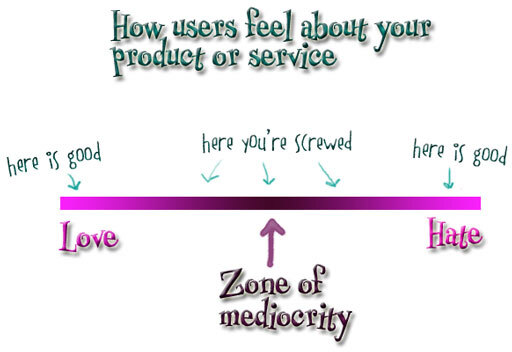
It was Kathy Sierra who changed my perspective on this. From being annoyed by straw men and non sequiturs to accepting them and the haters as a natural consequence of success. That if you want people to love your creation, you have to accept the opposing force. Yin and yang.
Here's how Kathy presented the choice:
It's safe there in the gray middle. Nobody is mad at you, nobody is making any bad-faith arguments, but also, nobody cares. Lots of work exists in this zone. And that's fine. We don't need every project to reach the moon! But when escape velocity is achieved, you can't avoid drawing energy from both sides.
All this isn't to say that all objections, skepticism, or criticisms come from haters. Far from it. But once sufficient success is secured, a large portion will. It's just that kind of planet, as Jim Rohn would say.
The trick is to see this in aggregate as a necessary milestone. One that's even worth celebrating! Have you even made something worth cheering for, if there isn't a contingent there to boo at it too? Probably not.
So embrace the boos as you embrace the cheers. They come as a pair.
Omarchy didn't even exist before this summer. I did much of the pre-release work during the downtime between sessions at the 24 Hours of Le Mans in June. And now, just a few months later, we've delivered a petabyte of ISOs in the past thirty days alone. That's about 150,000 installs of the Omarchy Linux distribution!
I've been involved with a lot of successful open-source projects in the past quarter of a century or so. Ruby on Rails, first and foremost. But nothing, not even Rails, grew as quickly as Omarchy has been growing in the first few months of its life. It's rather remarkable.
This is what product-market fit looks like. Doesn't matter if the product is free or not. The fit is obvious. The stream of people who don't just enjoy Omarchy but love it is seemingly endless. The passion is palpable.
But why? And why now?
As per usual, there are a lot of contributing factors, but key is how Apple and Microsoft have been fumbling their relationship with people who love computers in general and developers in particular.
Microsoft is killing off Windows 10, which in turn cuts off a whole slew of perfectly fine computers made prior to around 2017–2018. They also seem intent on shoving AI into everything, and wavering on whether that might be optional or not. Oh, and Windows is still Windows: decades of patching cracks in a foundation that just never was all that solid to begin with.
Apple too has turned a ton of people off with macOS 26 Tahoe, liquid glass, and faltering software quality. They're also cutting off all Intel-based Macs from future updates. A Mac Mini sold as recently as 2023 is now end-of-life! This is before we even talk about how poorly the company has been treating developers depending on the App Store bureaucracy.
Meanwhile, Linux has never looked better. Hyprland, the tiling window manager at the heart of Omarchy, is a sensation. It's brought an incredible level of finesse, detail, and style to the tiling window management space: superb animations, lightning-fast execution, and super-light resource consumption.
The historic gap in native GUI apps has never mattered less either. The web has conquered all as the dominant computing platform. In the past, missing, say, Photoshop was a big deal. Now it's Figma — a web app! — that's driving designers. Same too with tools like Microsoft Office or Outlook, which are all available on the web.
I'm not saying there aren't specialized apps that some people simply can't do without, that keep them trapped on Windows or Mac. But I am saying that they've never been fewer. Almost everything has a great web alternative.
And for developers, the fact is that Linux was always a superior platform in terms of performance and tooling for most programming environments. With 95% of the web running on Linux servers, all optimization and tuning needed to get the most out of the hardware was done with Linux in mind.
This is why even a $500 Beelink Mini PC is competitive with an M4 Max machine costing thousands of dollars for things like our HEY test suite, which runs on Ruby and MySQL. Linux is just really efficient and really fast.
Finally, I think the argument that owning your computer, fully and deeply, is starting to resonate. The Free Software crowd has been making the argument since the 90s, if not before, but it's taken Apple's and Microsoft's recent tightening of the reins on our everyday operating systems to make it relevant for most.
Omarchy is a beautiful, modern, and opinionated Linux distribution, but it's also yours. Everything is preconfigured, sure, but every configuration is also changeable. Don't like how something works? Change it. Don't like the apps I use? Change them. Don't like how something looks? Redesign it. The level of agency is off the charts.
Turns out that plenty of people were starved for just this. All it took was someone to actually put all the pieces together, ignore the Linux neckbeards who insist you aren't worthy to run Arch or Hyprland without spending a hundred hours setting it up from scratch, and invite everyone to the party!
We're fed an endless stream of consternation over AI slop these days. The content apocalypse is nigh! It'll rot your brain! Okay, sure, maybe, but have you seen the kind of content sludge that perfectly ordinary humans are capable of producing? It's thrice as tragic.
The web is full of it. Garbage writing and brain-dead shorts. Content mills pumping out nonsense pages and gagging videos to appease whatever the high priests of SEO now think they've divined will please Lord Google or Master TikTok.
It's been infecting websites everywhere with "calls to action", "white paper available upon sign up", and "10 ways to supercharge your productivity". Links stuffed into every crevice to juice rankings, capture "most searched for" keywords, and convert, convert, convert.
It's an affront to humanity to make sentient beings do this work. Turning human potential, creativity, and ingenuity into content sludge is a process no more dignified than turning pink slime into chicken nuggets.
I'll take AI slop over human sludge any day. Let the little robots barf up tokens to unlock the next basis point of incremental conversion. Better them than us, I say. This is exactly the soul-crushing, creative drudgery that machines were made to munch through without complaint.
But couldn't we do without sludge or slop, you say? Sure, right after we reach a shared state of nirvana. As soon as the average 4.5 hours of screen-on time is turned into real reading, real making, real pursuits. So that'll happen exactly never.
Case in point: the most important attribute of a phone for most people is still the battery life. These little content slop and sludge faucets can already spew out nearly an entire day's worth of nonstop eyeball junk, and yet you crave more. More! MORE!
So stop whining about the AI slop. You're already steeped in human sludge. And the door to exit both was always there. But you're not going to open it, are you?
There'll always be more emails in need of reply, more meetings to attend, and more updates to read. A person can fill the entire workweek with these tasks over and over again. But to stay sane and sharp, you must pay yourself first by doing the work that actually means something to you.
I feel this acutely as someone responsible to employees, customers, followers, and readers. I could do nothing all day but check up on projects, people, and posts, but my brain would quickly check out if it was just doing that.
So quite frequently, I just don't. Don't check in, don't check up, and instead dive into the work that checks my own intellectual boxes. Programming for the love of it. Experimenting for the hell of it. Researching for the fun of it.
In another age, I might have been tempted to apologize for such privilege, but screw that. Privilege is wonderful. You should do your best to earn more of it. Even if you have to carve it out of the bare rocks around you.
Ironically, the best way to do that is also to choose to always pay yourself first, however little at first. By solving your own problems, tickling your own interests, chasing your own curiosity. That's where you'll find the motivation to elevate your talent. To turn interest into competency.
And once you've developed some competency, you'll be rewarded with more privilege to build it further. This is the virtuous circle of merit.
There'll always be an endless list of work that could be done. You'll never get through it all and onto your own priorities, if you continue to put them at the bottom.
Every few years, the same sad contingent of Ruby malcontents tries to cancel me from Rails. At the peak of the woke era, back in 2022, they were actually successful in getting Ruby Central to uninvite me from doing the yearly keynote at RailsConf. But now RailsConf is dead, Rails World is thriving, and the cancellation nonsense is over.
Only I guess nobody told that same sad contingent! Because three days ago, they tried yet again, with the same trite grab bag of accusations: "he holds racist and transphobic views, as well as a number of other traits undesirable". And to add to the outrage theater, they named their little letter after a French resistance action fighting the Nazis during WWII. Subtle!
So far though, my experience has been that there are many more negative responses than positive. Maybe the Ruby community isn’t the place I thought it was, and MINASWAN was always a lie. That makes me sad. 😢
I guess I would be sad too if I had named my group after THE GOOD GUYS and then it turned out that everyone thought I was THE BAD GUYS. But that's exactly what happened. Theoutpouringofsupportfromallsideshasbeenoverwhelming.
This is what it looks like when preference falsification finally falls. When normal people are no longer afraid to say no to these people. Then it's revealed just how small and isolated these aggrieved individuals actually are.
It’s such a terrible mental tax on builders that divisive clowns just ride in and spew these bullshit terms that they clearly don’t understand themselves in bad faith. Ignore & keep building.
That's exactly what we're going to do. We're going to reject and ignore these nut jobs. Then we're going to keep building.
The last loonies on tech's woke island are getting desperate. It used to be that a wide variety of baseless accusations of racism, misogyny, or white supremacy could inflict grave social and professional consequences for the accused, but that's no longer true. So now they've had to up the ante, and that's why everyone is suddenly a nazi to these people.
Because if you can't intimidate people into silence and compliance with the woke orthodoxies by threatening their job or their social circle, you might be able to threaten them with actual violence or worse. That's what the "nazi" accusation is there to convey: That violence has been authorized.
The slogan has been around for a while: Punch a nazi. It has a sorta quaint, winking phrasing, so you'd be forgiven for thinking that maybe it wasn't actually meant as a real threat. But I think that theory has gone out the window. Just look at what happened to Charlie Kirk.
This is a natural consequence of all the lost terrain. The DEI bureaucracies in tech have been decimated or dismantled. The tone-setting social media, X, can no longer be wielded for narrative control (and Bluesky keeps shrinking from purity purges). And finally, the American administration went from blue to red in 2024.
Lost terrain means lost leverage. Which means the usual threats have stopped working because they relied on that institutional and broad social leverage to be effective. And these loonies know that.
The threat of violence, however, is evergreen. It's the final resort of a movement that has lost a political and philosophical path to victory in the public square. It's sad, it's pathetic, but you're not wrong to be worried when political assassinations are justified and exalted in reference to the "nazi" threat.
But that's just all the more reason you can't give in, you can't give up. The defeat of wokeism in the workplace should give you comfort. These people are not invincible. The wheels have been falling off their political project for years now. You can and should say "no" when they come with the "nazi" nonsense too.
It takes ten years for the culture of a great company to fall apart once the CEO seat is given to someone without an engineering or product background. That's been the story of Boeing, Intel, and now Apple. Legendary American companies that all got lost when a bean counter, marketing man, or logistics hand took over.
Boeing's troubles started when they were taken over by McDonnell Douglas in 1997, but really accelerated after 2005 when they installed their first CEO with no aerospace background. The result, after ten years of cost-cutting and outsourcing, was the 737 MAX MCAS tragedies, and an organization gutted of ambition and engineering pride.
Intel did the same thing, and almost at the same time. In 2005, they too installed their first CEO without an engineering background. Ten years later, they were stumbling with delayed nodes, stalled progress, and no answers on mobile. Now the entire business is teetering.
Finally, Apple. Steve Jobs handed the reins to Tim Cook in 2011, but such was the strength of the product pipeline and culture that Jobs left behind, that it initially looked like Cook could break the spell. Show that it was possible for a logistics man to steer one of the great ships of American ingenuity and tech supremacy.
But now the ten-year curse is hitting Apple with an eerily familiar thud. They wasted a decade chasing a self-driving dream without direction, and ended up with the worst possible car interface to show for it. They completely missed the boat on AI, and embarrassed themselves with Genmoji and vaporware ads. And the Vision pro has been an expensive tech demo that nobody actually wanted to wear three months after they bought it.
The profits still gush from glories past, and the tollbooth operation on the App Store, but the soul has left the machine.
While these three stories are different, they're drawn from the same archetype: Great companies need bold, hands-on leaders who live and breathe the stuff they make or they'll eventually hollow out.
It's tempting for boards of public companies to think that all care and competence around product can be delegated down the org chart. That someone who can hit the numbers is all you need at the top. But it's not.
You need an Andy Grove, Phil Condit, or Scott Forstall. You need someone so professionally invested in the work and the culture that they'll refuse to let the search for surface-level efficiencies drain the foundation of its strength. You need an engineer or a product person as CEO.
As soon as I was old enough to travel on my own, London was where I wanted to go. Compared to Copenhagen at the time, there was something so majestic about Big Ben, Trafalgar Square, and even the Tube around the turn of the millenium. Not just because their capital is twice as old as ours, but because it endured twice as much, through the Blitz and the rest of it, yet never lost its nerve. I thought I might move there one day.
That was then. Now, I wouldn't dream of it. London is no longer the city I was infatuated with in the late '90s and early 2000s. Chiefly because it's no longer full of native Brits. In 2000, more than sixty percent of the city were native Brits. By 2024, that had dropped to about a third. A statistic as evident as day when you walk the streets of London now.
Copenhagen, by comparison, was about eighty-five percent native Danes in 2000, and is still three-quarters today. Enough of a foreign presence to feel cosmopolitan, but still distinctly Danish in all of its ways. Equally statistically evident on streets and bike lanes.
But I think, what would Copenhagen feel like, if only a third of it was Danish, like London? It would feel completely foreign, of course. Alien, even. So I get the frustration that many Brits have with the way mass immigration has changed the culture and makeup of not just London, but their whole country.
That frustration was on wide display in Tommy Robinson's march yesterday. British and English flags flying high and proud, like they would in Copenhagen on the day of a national soccer match. Which was both odd to see but also heartwarming. You can sometimes be forgiven for thinking that all of Britain is lost in self-loathing, shame, and suicidal empathy. But of course it's not.
Recently, a projection that Danes would be a minority in their own country by 2096 caused an enormous stir in Denmark. Politicians across the spectrum decried what a catastrophe that would be for this world's oldest continuous monarchy. But a demographic nightmare worse than that has already enveloped London!
So it's tough to blame the Brits for being pissed. No matter how hard they voted one way or the other, Brexit or no Brexit, the erosion of their national identity kept marching forward at an ever-greater pace. Not due to some unavoidable cosmic destiny, but due to equal parts policy and apathy. The boats kept coming, the migrant hotels kept expanding, and the British authorities kept cracking down on anyone who dared criticize that trajectory or the present-day reality.
Which brings us back to Robinson's powerful march yesterday. The banner said "March for Freedom", and focused as much on that now distant-to-the-Brits concept of free speech, as it did on restoring national pride.
And for good reason! The totalitarian descent into censorious darkness in Britain has been as swift as its demographic shift. British police are now making 30 arrests a day for wrongthink, wrongspeech, and other online transgressions against "the regime narrative", as the BBC would have reported, if this were a statistic from a foreign nation.
Most recently, five officers(!) came to arrest comedian Graham Linehan for illicit tweets. When much of the media reports a story like this, it's often without citing the specific words in question, such that the reader might imagine something far worse than what was actually said. So you should actually read the three tweets that landed Linehan in jail, and earned him a legal restraining order against using X. It's grotesque.
The easy way out of this uncomfortably large gathering of perfectly normal, peaceful Brits who've had enough is to tar them all as "far right". That's not just a British tactic, but one used across Europe, and previously in the US as well. It used to work very well, because the historical stigma was so strong, but, like hurling "nazi" and "fascist" at the most middle-of-the-road political figures and positions, it's finally lost its power.
I really feel for the Brits because it's not obvious how they get themselves out of this pickle. They're still reeling from the Pakistani rape gangs that were left free to terrorize cities like Rotherham and Rochdale for years on end with horror-movie-like scenes of the most despicable, depraved abuse of British girls. Unlike Linehan's tweets, I actually implore you not to peruse these stories too closely, though, because they'll make you sick. So how do you even begin to correct course?
I don't know. But I'm glad that there clearly are many Brits who are determined to find out. Unwilling to just let their society wither away while their bobbies chase bad tweets instead of the rampant street thefts or those barbaric rape gangs. Unwilling to resign the rest of the country to the kind of demographic replacement that befell London over the last two decades.
You can rest assured that I'd be in the streets waving a Danish flag if these were my conditions in my native country. I think that's a pretty universal sentiment. There's absolutely nothing racist or xenophobic in saying that Denmark is primarily a country for the Danes, Britain primarily a united kingdom for the Brits, and Japan primarily a set of islands for the Japanese.
Here's how the Danish Prime Minister, Mette Frederiksen of the Social Democrats, recently put it in an interview:
There are really a lot of us Danes who believed that when people came to this ‘world’s best country’ and were given such good opportunities, they would integrate. They would become Danish, and they would never, ever harm our society. All of us who thought that way have been wrong.
This is the challenge before not just the British establishment, but much of the European one too: To come to the realization of the Danish Prime Minister. Someone nobody could credibly charge with being "far right".
Which should give the Brits some solace. The Social Democrats in Denmark were once staunch believers in unfettered immigration and thought it dirty to even talk about the problems, but eventually reality and public pressure led them to better ideas. Why shouldn't that be possible in the UK?
Don't give up. You survived the Blitz. Britain will be back.
Apple spent a decade trying to develop their own car with Project Titan. It never launched, and was finally canceled in 2024, but not before the company had spent ten billion dollars on getting nowhere. In the same time frame, Tesla launched the Model X, Model 3, Model Y, and the Cybertruck. But maybe that's just because manufacturing cars is really hard, and at least Apple had some superior software ready to go? Also no.
We know this because the CarPlay Ultra project has been heralded as the one good salvageable part from the Project Titan disaster. Now it's available in the wild, with Aston Martin being the prestige launch partner, and? It's total shit.
Not only is the integration ludicrously laggy — like 12fps kind of laggy, like can't-even-keep-up-with-the-engine-reving kind of laggy — it's also buggy as hell. It crashed on the reviewers during their short time with the car, leaving them driving blind on real roads without any gauge cluster. WTF.
How does something like this go out the door at Cupertino? How does this company, so famed for its obsessive attention to detail, let CarPlay Ultra ship in such a laggy, buggy, and dangerous state?
Because Apple no longer has anyone left who can say no. You saw it with ad after ad that had to be pulled after getting pummeled by the public. You saw it with Apple Intelligence that was sold as the reason to get an iPhone 16, but in reality just was just dumb gimmicks, like genmoji. And now you see it with CarPlay Ultra.
I guarantee you there are programmers and designers inside Apple who know CarPlay Ultra wasn't ready to ship, but were overruled by managers who felt they needed to stick to their contractual obligations, quality be damned.
That's what happens when there's a lack of leadership who actually care about quality, about customers, and about the product. Who would be pained to let something as dodgy as this go out the door. When that's absent, the train wreck that everyone can see a mile away is going to happen is simply allowed to happen. Nobody reaches for the emergency brake, nobody wants to take responsibility to avoid disaster.
This is why companies led by founders tend to have much better products. Steve Jobs didn't always get it right, but you know that he and Jony Ive would have been in physical pain to see the Apple logo on something this laggy and broken. (Or so you'd hope, Ive did preside, towards the end of his time at Apple, over the five dark years of catastrophically unreliable MacBook keyboards!).
It's the same thing with the alarm bug in the iPhone. My wife, along with millions of others, judging from the endless online reports of the problem, has been struggling with the fact that the phone will randomly, intermittently just refuse to wake her in the morning. The alarm time will come and go, but there's no buzzing, no sound.
This has been going on for years. But that's just how it is, apparently, with the iPhone. Maybe the alarm works, maybe it doesn't. Good luck if you need to get up early for the airport or an important appointment.
Again, the problem is not the bug, it's the lack of ownership. All software has bugs! I've written many of them myself. But when we talk the type that has the criticality of making someone miss a flight or lose the gauge cluster on the road at night, you need to treat that like a CODE RED, and get all hands on deck to deal with it.
Apple has lost the power to do this. Because they've lost the will to say no. Because they've lost the last asshole who could insist that quality should count above quarterly earnings (as if the two even ought to be in opposition)!
If you leave the bozos in charge for too long, the entire organization will be shaped in their image. Tim Cook was a masterful logistics hand to Jobs, but he's been a bozo on product, quality, and care.
Debates, at their finest, are about exploring topics together in search for truth. That probably sounds hopelessly idealistic to anyone who've ever perused a comment section on the internet, but ideals are there to remind us of what's possible, to inspire us to reach higher — even if reality falls short.
I've been reaching for those debating ideals for thirty years on the internet. I've argued with tens of thousands of people, first on Usenet, then in blog comments, then Twitter, now X, and also LinkedIn — as well as a million other places that have come and gone. It's mostly been about technology, but occasionally about society and morality too.
There have been plenty of heated moments during those three decades. It doesn't take much for a debate between strangers on this internet to escalate into something far lower than a "search for truth", and I've often felt willing to settle for just a cordial tone!
But for the majority of that time, I never felt like things might escalate beyond the keyboards and into the real world. That was until we had our big blow-up at 37signals back in 2021. I suddenly got to see a different darkness from the most vile corners of the internet. Heard from those who seem to prowl for a mob-sanctioned opportunity to threaten and intimidate those they disagree with.
It fundamentally changed me. But I used the experience as a mirror to reflect on the ways my own engagement with the arguments occasionally felt too sharp, too personal. And I've since tried to refocus way more of my efforts on the positive and the productive. I'm by no means perfect, and the internet often tempts the worst in us, but I resist better now than I did then.
What I cannot come to terms with, though, is the modern equation of words with violence. The growing sense of permission that if the disagreement runs deep enough, then violence is a justified answer to settle it. That sounds so obvious that we shouldn't need to state it in a civil society, but clearly it is not.
Not even in technology. Not even in programming. There are plenty of factions here who've taken to justify their violent fantasies by referring to their ideological opponents as "nazis", "fascists", or "racists". And then follow that up with a call to "punch a nazi" or worse.
When you hear something like that often enough, it's easy to grow glib about it. That it's just a saying. They don't mean it. But I'm afraid many of them really do.
Which brings us to Charlie Kirk. And the technologists who name drinks at their bar after his mortal wound just hours after his death, to name but one of the many, morbid celebrations of the famous conservative debater's death.
It's sickening. Deeply, profoundly sickening.
And my first instinct was exactly what such people would delight in happening. To watch the rest of us recoil, then retract, and perhaps even eject. To leave the internet for a while or forever. But I can't do that. We shouldn't do that.
Instead, we should double down on the opposite. Continue to show up with our ideals held high while we debate strangers in that noble search for the truth. Where we share our excitement, our enthusiasm, and our love of technology, country, and humanity.
I think that's what Charlie Kirk did so well. Continued to show up for the debate. Even on hostile territory. Not because he thought he was ever going to convince everyone, but because he knew he'd always reach some with a good argument, a good insight, or at least a different perspective.
You could agree or not. Counter or be quiet. But the earnest exploration of the topics in a live exchange with another human is as fundamental to our civilization as Socrates himself.
The first Rails World in Amsterdam was a roaring success back in 2023. Tickets sold out in 45 minutes, the atmosphere was electric, and The Rails Foundation set a new standard for conference execution in the Ruby community.
So when we decided to return to the Dutch Capital for the third edition of the conference this year, the expectations were towering. And yet, Amanda Perino, our executive director and event organizer extraordinaire, managed to outdo herself, and produced an even better show this year.
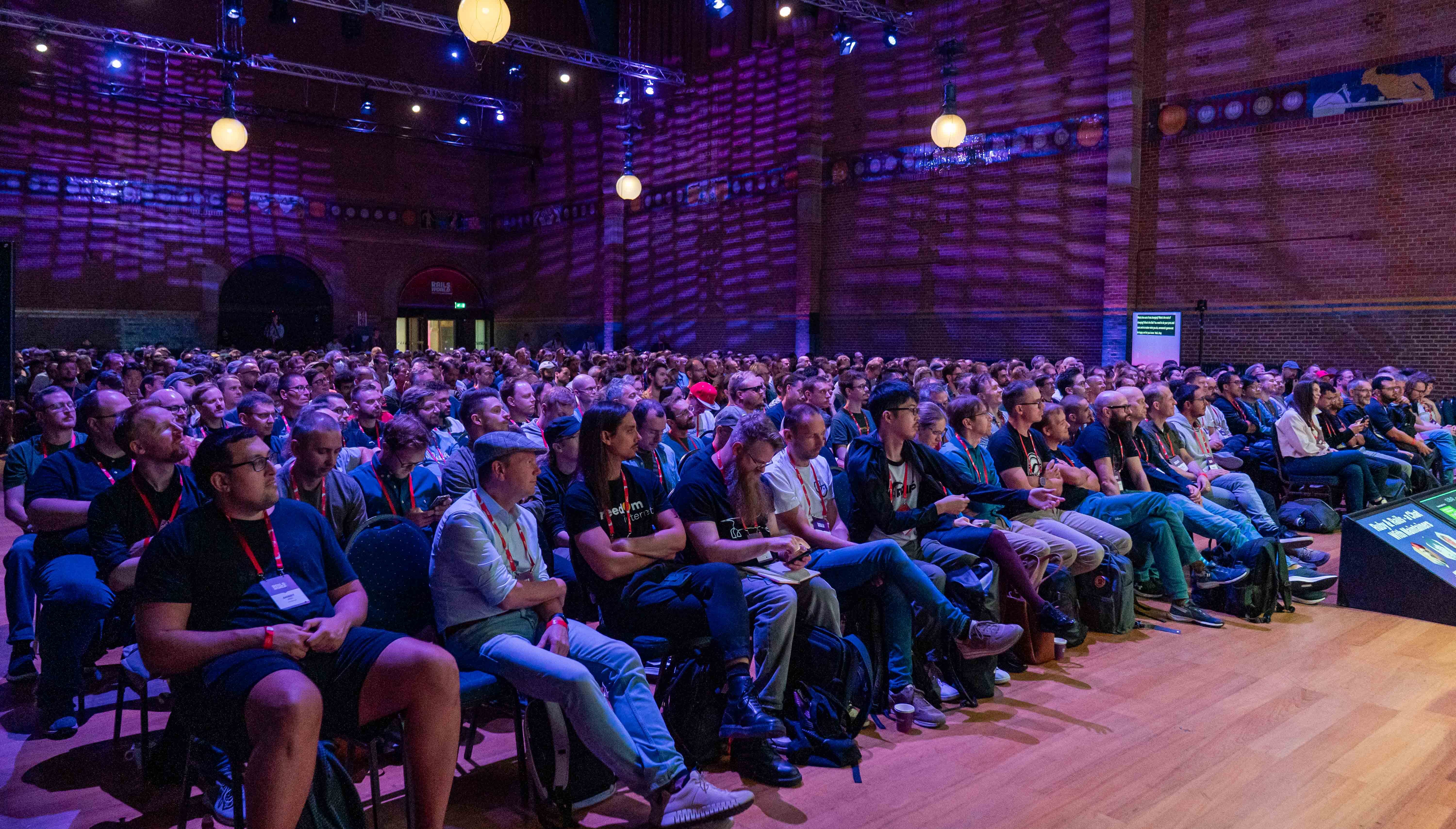
The venue we returned to was already at capacity the first time around, but Amanda managed to fit a third more attendees by literally using slimmer chairs! And I didn't hear any complaints the folks who had to sit a little closer together in order for more people to enjoy the gathering.
The increased capacity didn't come close to satisfy the increased demand, though. This year, tickets sold out in less than two minutes. Crazy. But for the 800+ people who managed to secure a pass, I'm sure it felt worth the refresh-the-website scramble to buy a ticket.
And, as in years past, Amanda's recording crew managed to turn around post-production on my keynote in less than 24 hours, so anyone disappointed with missing out on a ticket could at least be in the loop on all the awesome new Rails stuff we were releasing up to and during the conference. Every other session was recorded too, and will soon be on the Rails YouTube channel.
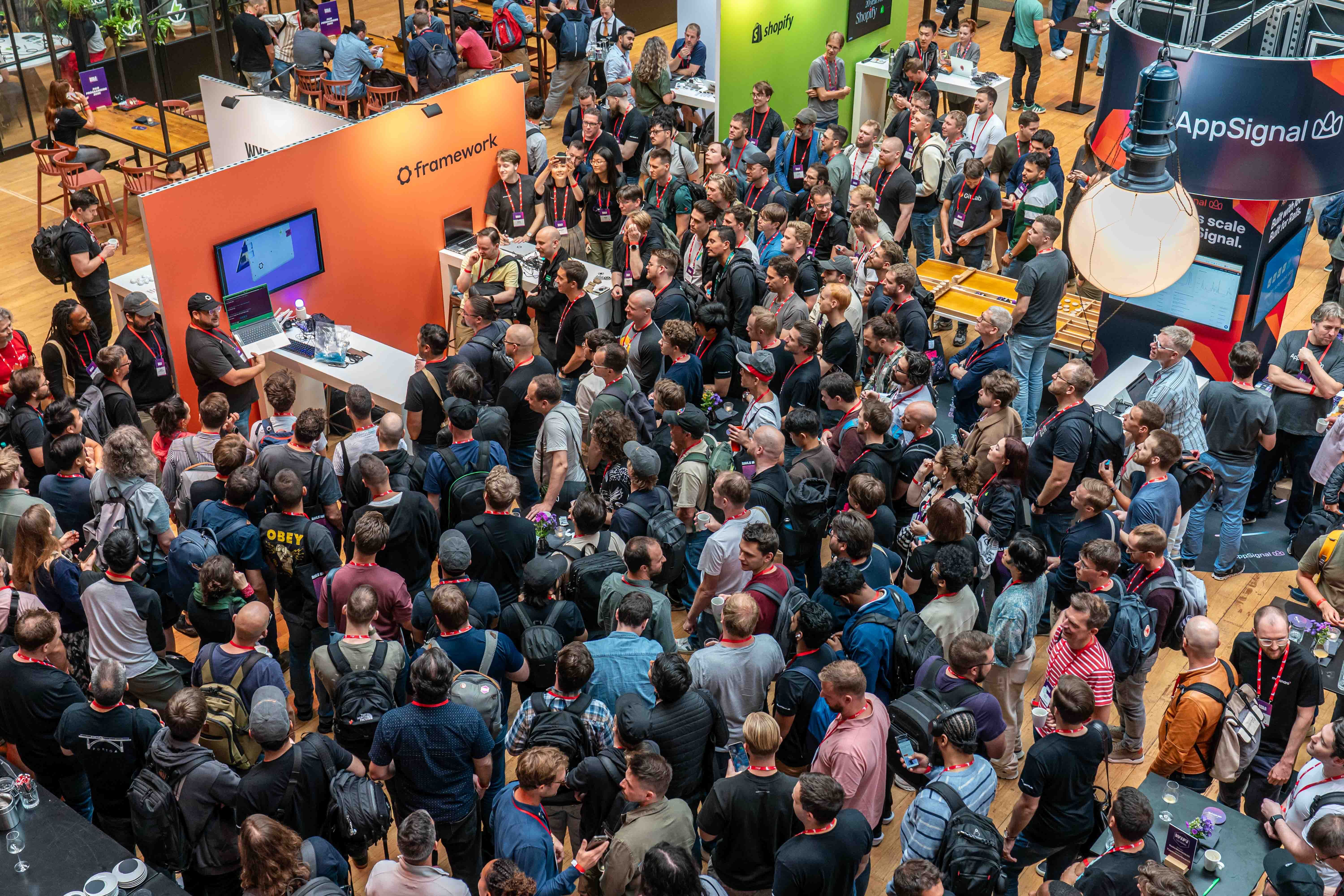
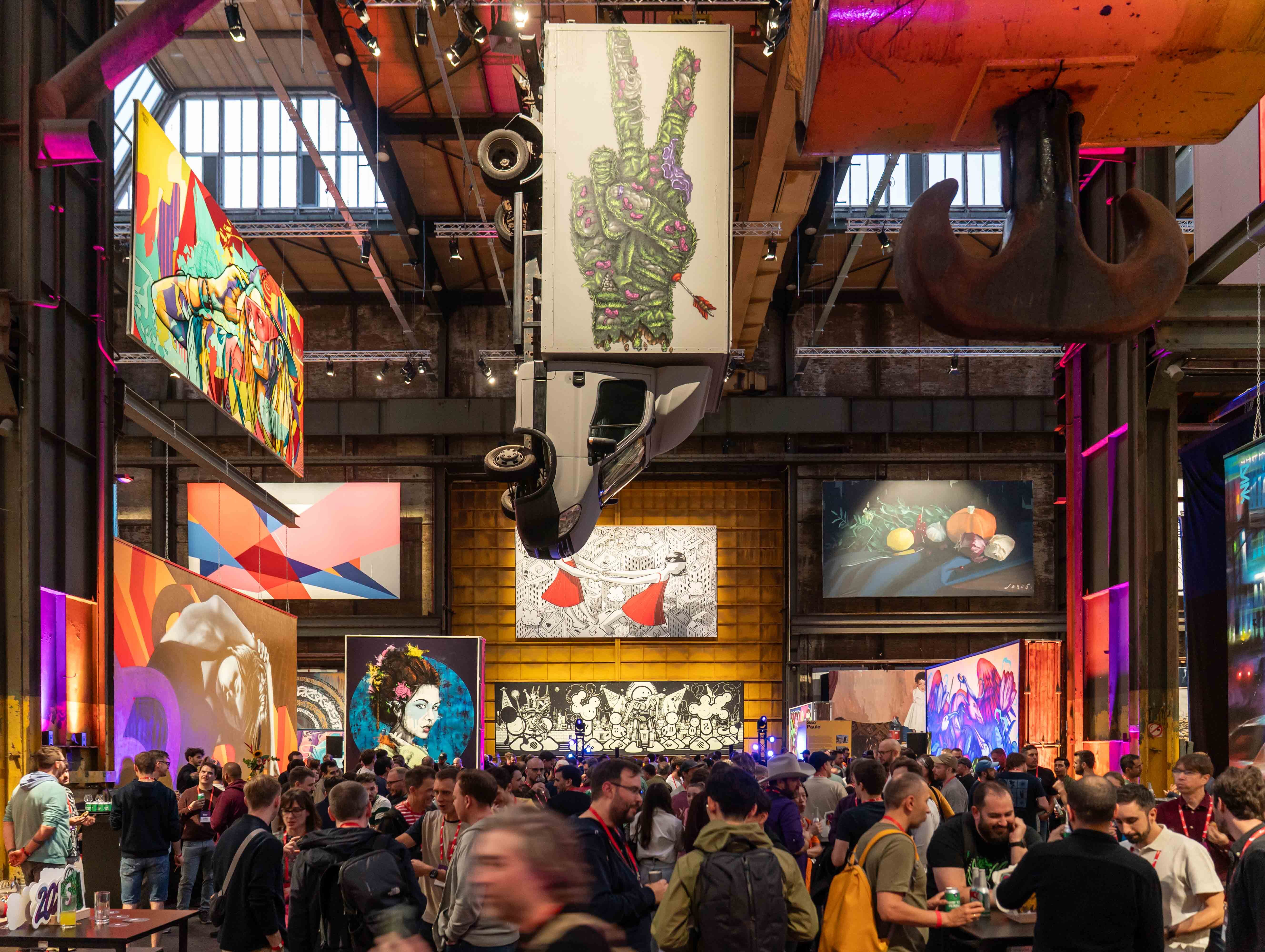
You can't stream the atmosphere, the enthusiasm, and the genuine love of Ruby on Rails, though. I was once again blown away by just how many incredible people and stories we have in this ecosystem. From entrepreneurs who've built million (or billion!) dollar businesses on Rails, to programmers who've been around the framework for decades, to people who just picked it up this year. It was a thrill to meet all of them, to take hundreds of selfies, and to talk about Ruby, Rails, and the Omarchy expansion pack for hours on the hallway track!
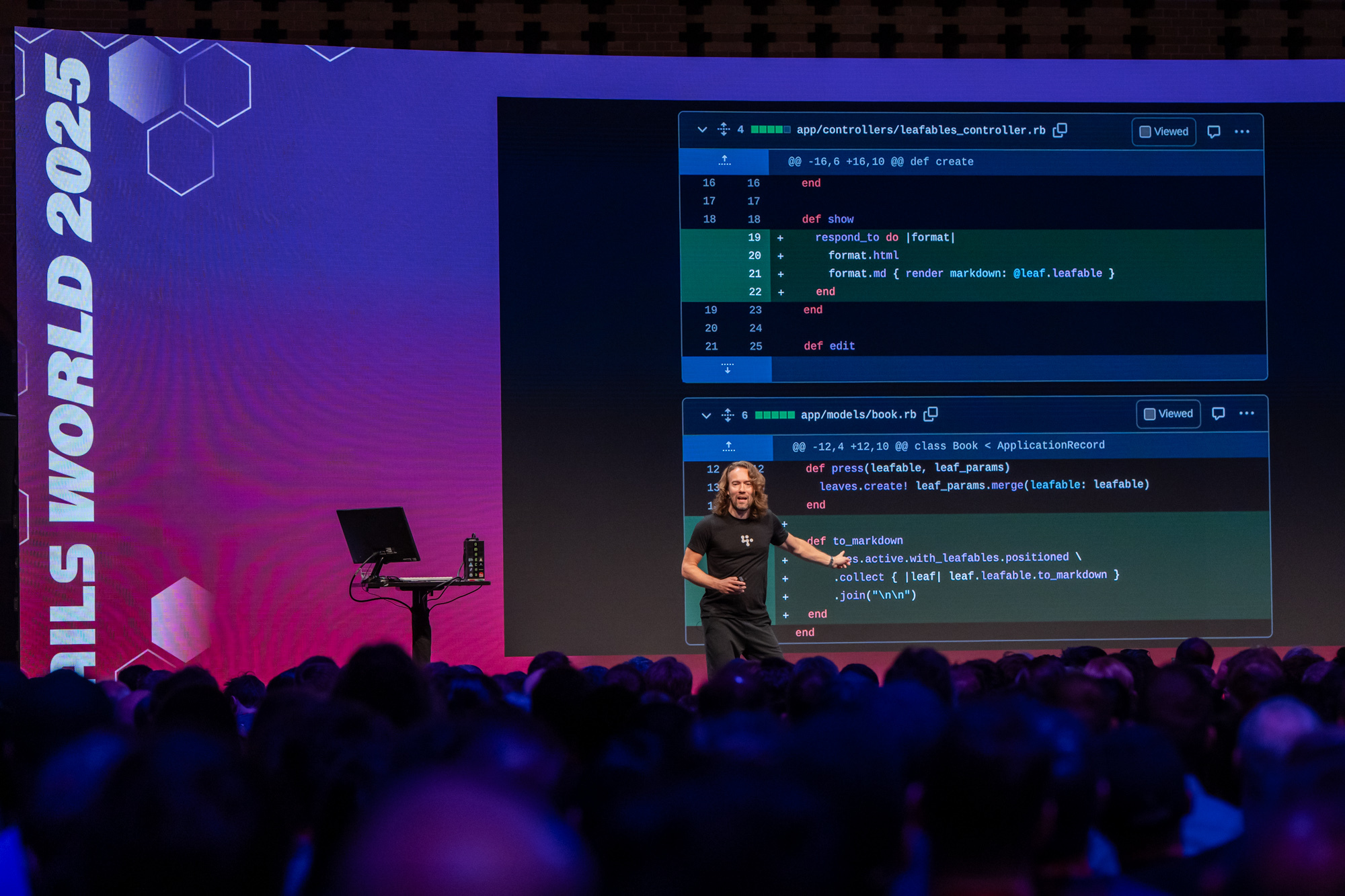
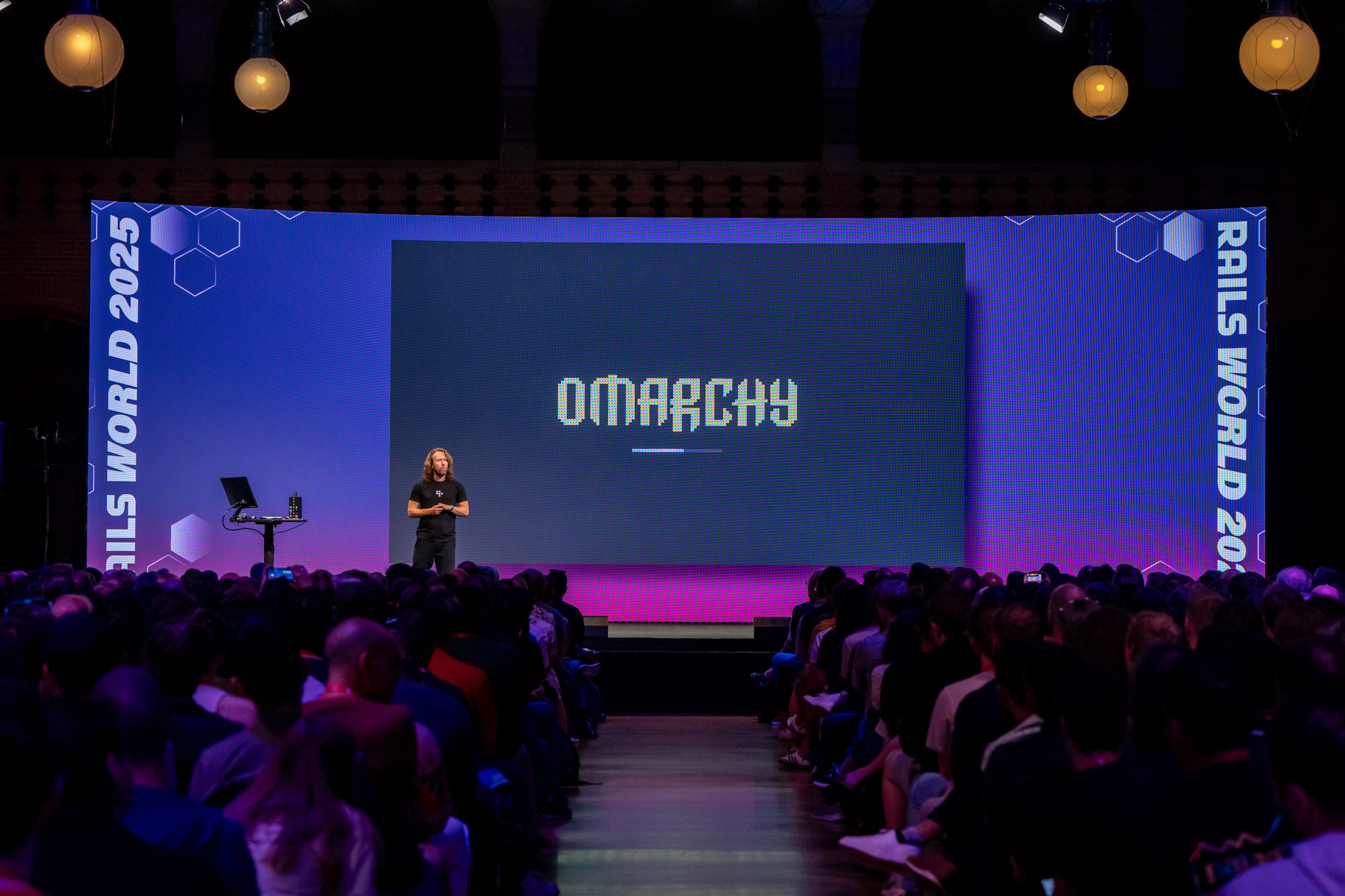
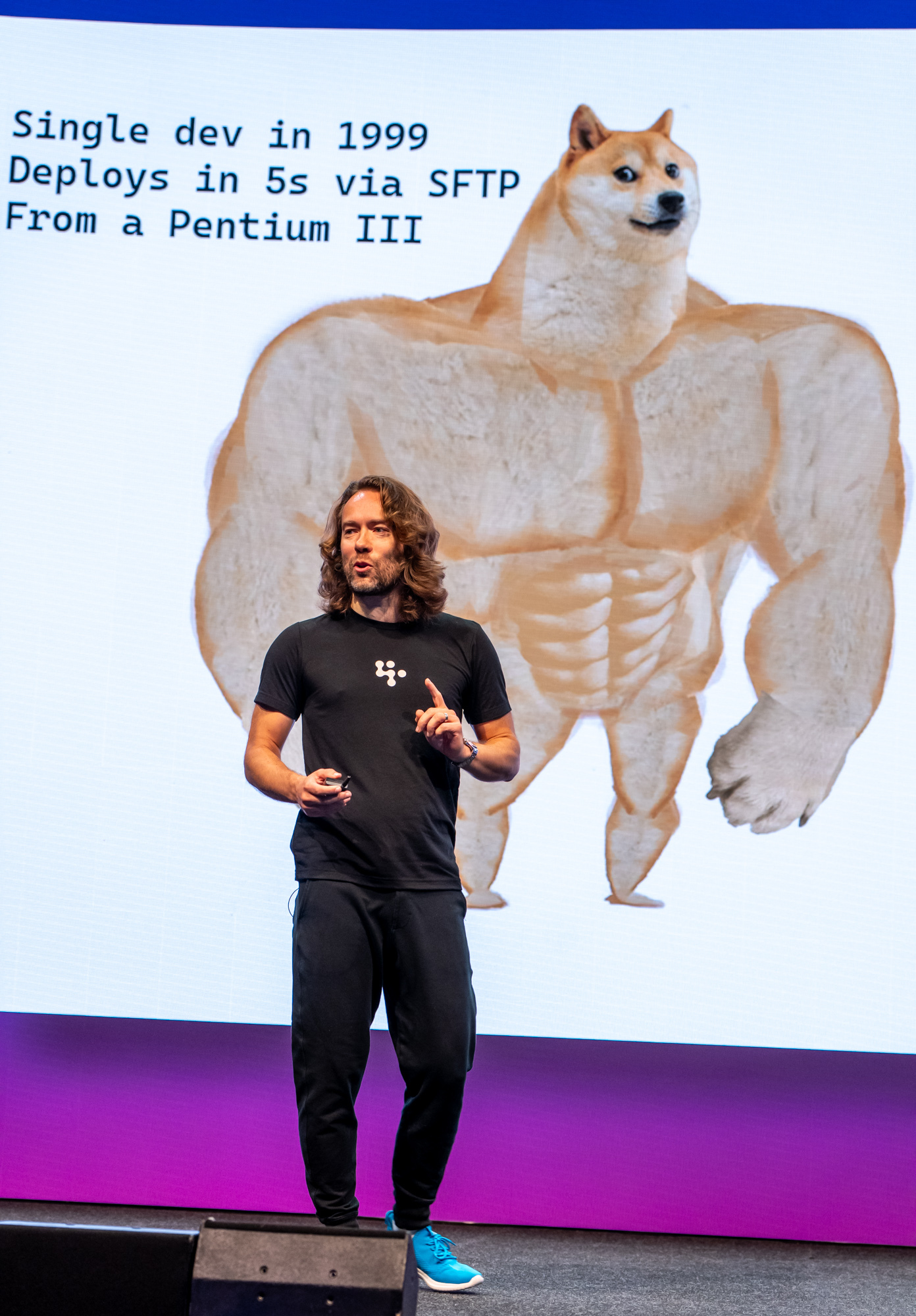
I've basically stopped doing prepared presentations at conferences, but Rails World is the one exception. I really try my best to put on a good show, present the highlights of what we've been working on in the past year at 37signals, and transfer the never-ending enthusiasm I continue to feel for this framework, this programming language, and this ecosystem.
True, I may occasionally curse that commitment in the weeks leading up to the conference, but the responsibility is always rewarded during and after the execution with a deep sense of satisfaction. Not everyone is so lucky as I've been to find their life's work early in their career, and see it continue to blossom over the decades. I'm eternally grateful that I have.
Of course, there's been ups and downs over the years — nothing is ever just a straight line of excitement up and to the right! — but we're oh-so-clearly on the up-up-up part of that curve at the moment. I don't know whether it's just the wind or the whims, but Rails is enjoying an influx of a new generation of programmers at the moment.
No doubt it helps when I get to wax poetically about Ruby for an hour with Lex Fridman in front of an audience of millions. No doubt Shopify's continued success eating the world of ecommerce helps. No doubt the stability, professionalism, and execution from The Rails Foundation is an aid. There are many auxiliary reasons why we're riding a wave at the moment, but key to it all is also that Ruby on Rails is simply really, really good!
Next year, with RailsConf finished, it's time to return to the US. Amanda has picked a great spot in Austin, we're planning to dramatically expand the capacity, but I also fully expect that demand will continue to rise, especially in the most prosperous and successful market for Rails.
Thanks again to all The Rails Foundation members who believed in the vision for a new institution back in 2022. It looks like a no-brainer to join such a venture now, given the success of Rails World and everything else, but it actually took guts to sign on back then.
I approached quite a few companies at that time who could see the value, but couldn't find the courage to support our work, as our industry was still held hostage to a band of bad ideas and terrible ideologies.
All that nonsense is thankfully now long gone in the Rails world. We're enjoying a period of peak unity, excitement, progress, and determination to continue to push for end-to-end problem solving, open source, and freedom.
I can't tell you how happy it makes me feel when I hear from yet another programmer who credits Ruby on Rails with finding joy and beauty in the writing web applications because of what I started over 22 years ago. It may sound trite, but it's true: It's an honor and a privilege. I hope to carry this meaningful burden for as long as my intellectual legs still let me stand.