阅读视图

Sunday Symposium

By The Minimalists

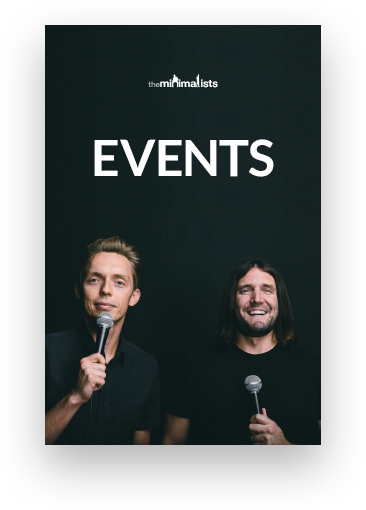
A simple gathering for simple people. Join The Minimalists for our upcoming Sunday Symposiums in Southern California. Tickets are free thanks to the kind people at Earthing. Register soon because seats are limited:

Los Angeles – Dec 28 (free tickets)

Each event includes free coffee, a sound bath, a talk from The Minimalists, an audience Q&A, and more. Together we’re creating a loving, dogma-free community—and we’d like you to be a part of it. All beliefs and non-beliefs are welcome. All ages. Free hugs!

*sign up for emails to be notified

Tour Updates

Upcoming Events

Sign up for our newsletter, and you’ll be the first to hear about live events in your city.

The post Sunday Symposium appeared first on The Minimalists.

  •  

JFM’s Favorite Albums of 2024

By Joshua Fields Millburn

Each year since we started The Minimalists, I’ve catalogued my favorite albums at the end of the calendar year. This one is a few months late, but better late than never. Here are my favorites from 2024. (You can find previous years here.)

1. Donovan Woods, Things Were Never Good If They’re Not Good Now

2. Joshua Hyslop, Evergold

3. Soccer Mommy, Evergreen

4. Mat Kearney, Mat Kearney

5. Slow Runner, Yesterday Don’t Fail Me Now

6. Kendrick Lamar, GNX

7. Aquilo, You Should Get Some Sleep

8. PARTYNEXTDOOR, P4

9. Jeffrey Focault, The Universal Fire

10. Maggie Rogers, Don’t Forget Me

11. Childish Gambino, Atavista

12. Future & Metro Boomin, We Still Don’t Trust You

Honorable Mentions: Vory, Roy Woods, Khalid, Lee DeWyze, Mustafa, tendai, Snow Patrol, Michael Flynn, mike., Peter Bradley Adams, Novo Amor, Local Natives, Dua Lipa, ScHoolboy Q, mgk & Trippie Redd, Andrew Belle, Two Lanes, Kevin Gates, ¥$.

What was your favorite album this year?
Let me know via DM on Instagram.

Subscribe to The Minimalists via email.

The post JFM’s Favorite Albums of 2024 appeared first on The Minimalists.

  •  

Promises

By T.K. Coleman

Promises are tricky things.

If they were coins, they’d have two sides: making them and keeping them.

Making them is convenient.

A promise like I’ll donate what I don’t use can make accumulating things feel charitable.
A promise like I’ll organize all this when life slows down can make procrastination look like patience.
A promise like I vow to never do that again can sound like redemption.
A promise like We’ll take that vacation soon can buy hope, even if the calendar never changes.
A promise like I’ll pay later with interest can open doors that cash can’t.

Yes, making promises is convenient. But keeping them is costly.

The convenience of a promise is balanced by the cost of delivery—or the consequences of disappointment.

Delivery requires effort and sacrifice. It isn’t measured by what we say, but by what we do.

Disappointment erodes trust. When promises pile up without action, the entire coin loses its value.

Ask anyone who’s waited for a call that never came.
Or circled a date on the calendar for a trip that never happened.
Or worse—anyone who stopped believing in themselves because of vows broken to their own soul.

The point isn’t to make more promises. It isn’t even just to keep the ones we make. It’s to learn how to make promises that we can—and truly want to—keep.

Before you make your next promise, ask:

Am I making this promise to avoid conflict?
Do my promises reflect my values—or other people’s expectations?
Is a promise the best way to solve this problem—or to create this result?
Could I create the experience I want without making a promise at all?
And if a promise is truly necessary … am I prepared to pay the price of keeping it?

Anyone can mint promises. Fewer can spend them wisely.

Struggling with emotional, physical, or mental clutter? Book a Clutter Counseling session with T.K. Coleman.

The post Promises appeared first on The Minimalists.

  •  

The Perfect Closet

By Joshua Fields Millburn

The perfect closet exists, but it is not located on the other side of your next purchase.

According to the Public Interest Research Group, the average American buys 53 new articles of clothing each year. That’s more than one new thing per week and four times as much as in the year 2000. Accordingly, garment manufacturers are now producing more than 100 billion pieces every year.

It’s easy to blame fast fashion for our overconsumption. Indeed, rapacious corporate greed is a part of the problem. But companies are ceaselessly churning out new attire only because we shoppers keep demanding more.

Just like everyone else, you and I yearn to be trendy. When you think about it, though, trendy is just marketing jargon that really means “soon to go out of style.”

Next time you look in the mirror, consider doing more than a ‘fit check. Consider being honest with yourself about those misplaced desires and insecurities that lead to discontent and debt and piles of cheap clothes, not a perfect closet.

As a recovering perfectionist, I know it feels like that new belt, those new shoes, that new dress will scratch your consumer itch. After all, you’re just a few outfits away from a flawless closet, right?

No.

You see, the word perfect comes from the Latin word perficere, which breaks down into per- (“completely”) and facere (“do”). In other words, perfect does not mean flawless; it means completely done.

Thus, the key to a perfect closet is not addition—it is subtraction.

The wardrobe you want won’t be crafted by acquiring more costumes. (How many years have you been sold that lie?) No, perfect is uncovered when you jettison the clutter that incompleted your closet in the first place.

So, instead of buying a new item every week, just like your fellow trendsetters, what would happen if you let go of ten old items this week?

You can start with anything you haven’t worn in the last year. Soon, you will find yourself donating everything you haven’t worn in the last 90 days.

In the end, with all the excess out of the way, all that remains are your favorite clothes. Perfect was hiding in your closet this whole time. No purchase necessary.

Subscribe to The Minimalists via email.

The post The Perfect Closet appeared first on The Minimalists.

  •  

Everything Is Final

By The Minimalists

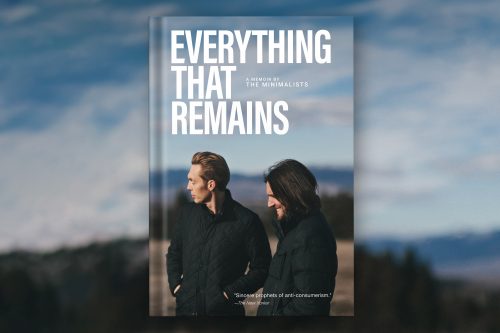
The tenth anniversary edition of our #1 bestselling book, Everything That Remains, enhanced with a beautiful new cover, is now available in paperback, ebook, and audiobook formats.

Synopsis

What if everything you ever wanted isn’t what you actually want? Twenty-something, suit-clad, and upwardly mobile, Joshua Fields Millburn thought he had everything anyone could ever want. Until he didn’t anymore.

Blindsided by the loss of his mother and his marriage in the same month, Millburn started questioning every aspect of the life he had built for himself.

Then, he accidentally discovered a lifestyle known as minimalism … and everything started to change.

In the pursuit of looking for something more substantial than compulsory consumption and the broken American Dream, Millburn jettisoned most of his material possessions, paid off loads of crippling debt, and walked away from his six-figure career.

So, when everything was gone, what was left? Everything That Remains is the touching, surprising story of what happened when one young man decided to let go of everything and begin living more deliberately. Heartrending, uplifting, and deeply personal, this engrossing memoir is peppered with insightful (and often hilarious) interruptions by Ryan Nicodemus, Millburn’s best friend of twenty years.

Available formats: Paperback · Kindle · Audiobook

Subscribe to The Minimalists via email.

The post Everything Is Final appeared first on The Minimalists.

  •  

Letting Go in Advance

By Joshua Fields Millburn

Clothing clutter accumulates at the checkout line, well before it overflows your closets, hampers, and dresser drawers.

According to the EPA, the average American throws out more than 81 pounds of clothing each year, even though 95% of it could be reused or recycled.

Sounds like we are burdened by the residue of regret.
Sounds like we own more than enough.
Sounds like we don’t need more.

Yet we keep buying more: more shirts and pants and belts and shoes and dresses and shorts and jackets and wallets and purses and accessories, 85% of which will soon occupy space in a landfill.

Why are we so addicted to purchasing new clothes that will shortly become trash?

The answer involves many factors—false promises from marketers, slights of hand from advertisers, unconscious peer pressure from friends and coworkers—but the core characteristic of our overconsumption is consumerism.

Consumerism is the ideology that externalities will complete you—that buying more will somehow make your life more complete.

We believe this nonsense only because we don’t understand what enough is. So we accumulate more than enough, hoping that eventually we’ll get to the point at which our wardrobes, and thus our lives, are perfect.

And yet it doesn’t work.
Consumerism can’t complete you.
Because you are already complete.

Even when you’re standing alone in an empty closet,
dressed in the simplest attire,
you are complete.

Think about it.

Have you ever looked at a newborn and said,
This baby is incomplete
so I better buy her a bunch of new things
to perfect that imperfect little child?

Of course not.

So…

If you were complete when you were born—
when you owned zero possessions—
then at what point did you become incomplete?

You became incomplete
the moment your consumer culture
convinced you to burn yourself
with the flame of consumerism.

Thankfully, that fire
can be extinguished by
the gentle waters of simplicity.

Be it clothes, cars, or commodities, no material possession will complete you or make you happy, even though it feels like they can when you’re steeped in a retail frenzy. If anything, excess possessions cover up your happiness, which means, in a real way, new purchases don’t complete you—they incomplete you!

However, a complete life does exist—it exists on the other side of letting go, letting go of the past by donating and recycling the waste, and then letting go of the future by letting go of the stuff in advance.

You see, the simplest way to get rid of an item is to avoid bringing it home in the first place.

Subscribe to The Minimalists via email.

The post Letting Go in Advance appeared first on The Minimalists.

  •  

Podcast Ep. 517 | Bad Thoughts

The Minimalists speak with Judah Smith about how other people’s perception of us can be upsetting, the biggest things that send people into a mental spiral, advice for minimizing when you’re stressed out, and much more.

Listen to the Episode

Apple · Spotify · Patreon

Discussed in This Episode

  • Should I read my mother’s diary after she dies?
  • What sends you into a mental spiral?
  • Right Here, Right Now: The Minimalist’s new TEDx Talk, “Scrolling Is the New Smoking,” is live!
  • Listener Tip: Clearing the external clutter often helps with the mental clutter.
  • What does it take to recognize enough and walk away from the rest?
  • Where’s the line difference between “body positivity” and thickheaded delusion?
  • How do you deal with people who possess contrary political, religious, and ideological beliefs?
  • How do you minimize when you’re stressed and under pressure?
  • Talkaboutable: No matter how hard you try, you cannot buy happiness for your child.
  • Added Value: A Christmas classic.

Minimal Maxims

Joshua, Ryan, and T.K.’s pithy, shareable, less-than-140-character responses. Find more quotes from The Minimalists at MinimalMaxims.com.

  • No one has the power to upset you, unless you give them the keys to your heart.
  • Stillness isn’t optional—it’s oxygen.
  • To worry is to pray for something bad to happen.
  • To accept the things you can change is a recipe for dissatisfaction.
  • Every opinion is an opportunity to let go.
  • The first step in letting go is to loosen your grip.

Links Mentioned in This Episode

Follow Our Team

Have a question for the show? Call 406-219-7839 or email a voice memo to podcast@themins.com.

Subscribe to The Minimalists via email.

The post Podcast Ep. 517 | Bad Thoughts appeared first on The Minimalists.

  •  

Podcast Ep. 516 | Hoarder Moms

The Minimalists talk about being overwhelmed by other people’s clutter, dealing with hoarder family members, why a pound of experiences is worth more than a pound of Christmas gifts, five sneaky ways stores get you to spend money on stuff you don’t need, and much more.

Listen to the Episode

Apple · Spotify · Patreon

Discussed in This Episode

  • Why are T.K. and Joshua opening fortune cookies on the podcast?
  • How can I deal with my hoarder mom’s cluttered house?
  • Who’s the biggest hoarder in your family?
  • Right Here, Right Now: the 30-Day Minimalism Game, Sunday Symposium, and Zoom calls with The Minimalists
  • Listener Tip: Getting into the school spirit.
  • When is discipline helpful for decluttering, and when does it get in the way?
  • Why do people buy so many gifts that their loved ones don’t actually enjoy?
  • Talkaboutable: You have been tricked into consumerism by Starbucks.
  • Talkaboutable: A pound of experiences is worth more than a pound of Christmas gifts.
  • Sucky Ad: YouTube started putting ads on our videos…
  • Obsolete Object: Tossing our fancy bed set.
  • More About Less:  Sneaky Ways Stores Get You to Spend More Money on Stuff You Don’t Need.
  • Added Value: “Last Christmas”

Minimal Maxims

Joshua, Ryan, and T.K.’s pithy, shareable, less-than-140-character responses. Find more quotes from The Minimalists at MinimalMaxims.com.

  • If the cost of admission is misery, the price is too high.
  • It’s not what you notice—it’s what you do with what you notice.
  • Discipline flows through your boundaries.
  • Obligation is the most ambitious partypooper.
  • A pound of experiences is worth more than a pound of Christmas gifts.

Links Mentioned in This Episode

Follow Our Team

Have a question for the show? Call 406-219-7839 or email a voice memo to podcast@themins.com.

Subscribe to The Minimalists via email.

The post Podcast Ep. 516 | Hoarder Moms appeared first on The Minimalists.

  •  

Silence

By T.K. Coleman

I recently attended a silent retreat at a monastery.

At one point, while sitting outside in meditation, I saw a beautiful image hanging on the wall of a chapel. My immediate thought was: I should take a picture of that and share it on social media.

As I reached for my phone, I paused and asked myself:

“Do I ignore my phone and continue to bask in the richness of this silence?”

Or…

“Do I get online and make some noise about the richness of this silence?”

I ignored the phone and returned to the silence.

I grew up on, “Dance like no one is watching.”

Now I navigate a world that says, “Hey kid…you gotta dance! Everyone is watching!”

Each one contains a kind of truth.

When we unplug from the commotion of crowds, we discover the moves and grooves of the soul. We learn to dance to the rhythms of our true self.

When we reach out and connect with others, we master the steps that only a community can teach. We learn to move in harmony with the world.

Silence is like a dance with yourself; connection is like a dance with others—and both are beautiful.

The beauty isn’t found in renouncing one or the other—it’s in knowing when to join each dance.

Without silence, we lose ourselves.

Without connection, we lose each other.

It’s a delicate dance.

Struggling with physical, mental, or calendar clutter? Book a Clutter Counseling session with T.K. Coleman.

The post Silence appeared first on The Minimalists.

  •  

Podcast Ep. 515 | Holiday Shopping Season

The Minimalists talk about celebrating the holidays without consumerism, our craziest Black Friday stories, the willingness to walk away from anything, six often-overlooked spaces in your home to declutter right now, and much more.

Listen to the Episode

Apple · Spotify · Patreon

Discussed in This Episode

  • How does a minimalist enjoy the holidays without falling into the trap of consumerism?
  • What’s your craziest Black Friday story?
  • Right Here, Right Now: Sunday Symposium and the Gift of Less.
  • Listener Tip: The willingness to walk away.
  • What does the perfect minimalist home office look like?
  • Sucky Ad: How are sponsorships different from advertisements?
  • How can I stay minimal with my holiday decor when my family wants otherwise?
  • Talkaboutable: Every time I walk into my house, this is the decluttering energy I’m on.
  • Talkaboutable: Did you know that Charlie Sheen is a minimalist now?
  • Amass It or Trash It: Getting rid of holiday decorations.
  • More About Less: 6 Often-Overlooked Spaces in Your Home To Declutter Right Now
  • Added Value: Let’s gift wrap this episode with a little snow.

Minimal Maxims

Joshua, Ryan, and T.K.’s pithy, shareable, less-than-140-character responses. Find more quotes from The Minimalists at MinimalMaxims.com.

  • Gift-giving is not a love language any more than Pig Latin is a Romance language.
  • When Santa Claus turned corporate, the holiday season metamorphosed into the holiday shopping season.
  • Sale price is a fool’s price.
  • The best position is the next position.
  • A minimalist workspace is shaped by space as much as it is shaped by work.

Links Mentioned in This Episode

Follow Our Team

Have a question for the show? Call 406-219-7839 or email a voice memo to podcast@themins.com.

Subscribe to The Minimalists via email.

The post Podcast Ep. 515 | Holiday Shopping Season appeared first on The Minimalists.

  •