阅读视图

Podcast Ep. 525 | The Outliers

The Minimalists speak with Steve Patterson about being frustrated when people don’t understand us, the benefits and downsides of being abnormal, minimizing chaos at a cultural level, and more!

Listen to the Episode

Apple · Spotify · Patreon

Discussed in This Episode

  • Why do people frustrate me when they don’t understand my lifestyle?
  • In what ways are you abnormal? What are the benefits? What are the downsides?
  • Right Here, Right Now: The Minimalists’ Simplify Everything decluttering course.
  • Listener Tip: How might simplifying be an answer to the chaos?
  • How can I stop re-cluttering my house?
  • What tools can help you respond to people with intention rather than emotion?
  • How can I quit social media if I need it for my job or hobby?
  • Talkaboutable: Corporations don’t love you.
  • Added Value: A song about letting go of expectations and family identity.

Minimal Maxims

Joshua, Ryan, and T.K.’s pithy, shareable, less-than-140-character responses. Find more quotes from The Minimalists at MinimalMaxims.com.

  • Being understood is nice, but needing to be understood is a death sentence.
  • You care what other people think because there is an underlying dissatisfaction in your own life.
  • Needing less company doesn’t mean giving less love.
  • When consumerism is the norm, it pays to be flamboyantly abnormal.
  • You’re not good at decluttering if you’re also good at re-cluttering.
  • Every purchase has the potential to reduce your freedom.
  • A pause is the space for reflection, not reaction.
  • Choose patience over panic.
  • Scrolling is the new smoking.

Links Mentioned in This Episode

Follow Our Team

Have a question for the show? Call 406-219-7839 or email a voice memo to podcast@themins.com.

Subscribe to The Minimalists via email.

The post Podcast Ep. 525 | The Outliers appeared first on The Minimalists.
  •  

Absurd Things

By Joshua Fields Millburn

I met a man on the street last week who had taken an inventory of everything he owned after watching my last Netflix documentary.

His color-coded spreadsheet was
alphabetized and sorted by room—
columns for each item’s
retail price and purchase date,
plus a field for miscellaneous “stuff notes.”

Staring at the cells,
he was confounded by
the absurdity of his things.

According to him, his most laughable items included…

A fondue set.
(He’s lactose intolerant.)

Two hairdryers.
(He’s bald and lives alone.)

Half a bag of kibble.
(He’s allergic to dogs.)

Several KitchenAid attachments.
(For an appliance he donated years ago.)

By cataloging his things,
he brought everything
​out in the open—
shining a light on the clutter
that had been hidden for so long.

It was only then,
when the objects were on display,
that he felt the full weight
of his amassment.

Much like a retail store,
his inventory exposed his overstock—
enumerating what must go
to make room for worthwhile things.

As might be expected,
those “worthwhile” things
weren’t things at all. He was
making room for
freedom
peace
joy
love
and a healthy dose of self-respect
that a fondue pot could never contain.

Alas, his spreadsheet was not about objects.
It was a record of who he used to be,
who he imagined he might become,
and who he was quietly avoiding.

The absurd thing, of course,
wasn’t what he owned.
It was how long he carried it
without asking why.

After our conversation, this man
walked home and deleted his spreadsheet,
the same way he deleted the fondue set—
without ceremony, without regret.

Because…

Once you see the absurdity clearly,
you don’t need to itemize it anymore.
You simply stop carrying it.

Which made me wonder
what might surface
if we all took stock—
not of our things,
but of what we keep
just because we always have.

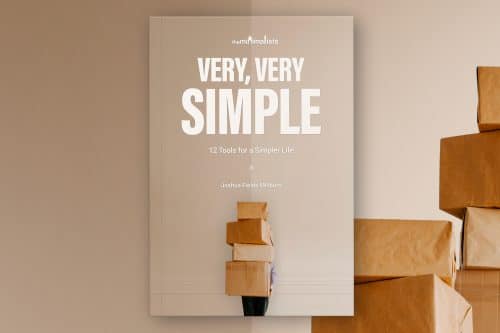
While I don’t recommend spending time indexing your possessions, this man’s story reminds me of the Out-in-the-Open Rule, which I discuss in detail in my new audiobook, Very, Very Simple. Download it for free today.

Subscribe to The Minimalists via email.

The post Absurd Things appeared first on The Minimalists.
  •  

Podcast Ep. 524 | Divorce

The Minimalists speak with divorce lawyer James J. Sexton about all the nuances of divorce, including the courage it takes to walk away from a marriage, housing and financial advice for recently single mothers, lessons from spousal cheating, how to know when a relationship is over, and much more!

Listen to the Episode

Apple · Spotify · Patreon

Discussed in This Episode

  • What does it take for someone to find the courage to file for divorce?
  • What housing and financial advice do you have for a recently divorced single mother?
  • How do you know whether a relationship is worth staying in and fighting for?
  • Right Here, Right Now: A new free audiobook and ebook from The Minimalists
  • Listener Tip: Often, we aren’t clinging to the thing; we’re clinging to the story we’ve written in our minds.
  • Should I hold on to sentimental items that trigger bad memories?
  • Should a married couple ever keep separate bank accounts?
  • How would marriages benefit from term limits?
  • Some fascinating divorce statistics.
  • More About Less: What is microcheating, and is it a big deal?
  • Added Value: A song that recognizes that the most difficult times can also be the best times of our lives.

Minimal Maxims

Joshua, Ryan, and T.K.’s pithy, shareable, less-than-140-character responses. Find more quotes from The Minimalists at MinimalMaxims.com.

  • Courage is the saddle that rests atop your biggest monsters.
  • If the battle builds you, it’s worth it. If it breaks you, it’s not.
  • If it requires fighting, it’s not worth fighting for.
  • Everyone wants to know where to start, but people rarely ask where to stop.
  • There are no sentimental items—only sentimental people.
  • A marriage built on romance has a shaky foundation.
  • Obligatory love isn’t love—it’s a liability.

Links Mentioned in This Episode

Follow Our Team

Have a question for the show? Call 406-219-7839 or email a voice memo to podcast@themins.com.

Subscribe to The Minimalists via email.

The post Podcast Ep. 524 | Divorce appeared first on The Minimalists.

  •  

The Wednesday Rule

By Joshua Fields Millburn

A few months ago, I turned down a lucrative publishing deal from a giant audiobook publisher. Not because I didn’t believe in the project—but because I did.

I wanted Very, Very Simple: 12 Tools for a Simpler Life to be immediately useful, frictionless, and free for the people who already support my work.

That audiobook is out now—and I’m making it free for a limited time on Patreon (you just need a free account). You can also download the free ebook if you prefer to read.

Very, Very Simple is a clear, compassionate guide to living with less—and finally feeling better about what you own. (T.K. Coleman recorded the audiobook with me; his wisdom may be the best part.)

When I wrote the book for the publisher, I included 12 practical tools—flexible rules, not rigid dogma—designed to help you decide what’s no longer acceptable in your life and let it go.

After I declined the publisher’s offer—because I believed their terms would limit the reach of this project—I decided to release the audiobook myself. And I added one more tool.

I call it the Wednesday Rule.

It’s the rule I’ve been using more than any other lately—because it helps me make better decisions now.

I apply it to purchases, health, relationships, finances, commitments, and material clutter. And fittingly, it’s very, very simple.

Here’s how it works…

Before you make a decision, simply ask yourself one question:

Will I be delighted with this decision next Wednesday?

It’s that simple.

Next Wednesday, when I’m looking back on my decision:

  • Will my future self be happy that I bought those pants?
  • Will my future self be satisfied that I ate those potato chips?
  • Will my future self be glad I got frustrated with my daughter?
  • Will my future self be excited by that meeting I scheduled?
  • Will my future self be thrilled that he didn’t clean out the junk drawer?
  • Will my future self be grateful he wasted that money on a lottery ticket?

If the answer is yes, then it’s probably a good decision:

  • Yes, I’m relieved I purchased this new dress shirt for my job interview.
  • Yes, I’m thankful I ordered the smoothie instead of the milkshake.
  • Yes, I’m pleased I acknowledged my coworker’s achievement.
  • Yes, I’m overjoyed I scheduled a coffee date with my best friend.
  • Yes, I’m pleased as punch that I cleared out that storage locker.
  • Yes, I’m grateful I invested my extra $100 in index funds.

However, if the answer is No, I will not be delighted by this decision, then the decision is already made for you:

When in doubt, opt out.

I like to think of it as “letting go in advance.”

Very, Very Simple isn’t about owning fewer things for the sake of minimalism. It’s about removing the excess that’s keeping you overwhelmed. Download it for free as an ebook or audiobook.

Subscribe to The Minimalists via email.

The post The Wednesday Rule appeared first on The Minimalists.
  •  

Podcast Ep. 523 | Time to Let Go

The Minimalists talk about why you have trouble getting the clutter out of the house after you’ve organized, how to know when it’s time to let go, the Wouldn’t Replace It Rule, how to deal with all that boomer junk you’ve inherited, and more.

Listen to the Episode

Apple · Spotify · Patreon

Discussed in This Episode

  • Why do I have trouble letting go of the things I’ve already decluttered?
  • How do you know when it’s time to let go of a thing?
  • Right Here, Right Now: The Simplify Everything decluttering course.
  • Listener Tip: When you let go of the need for certainty, you often pick up some peace of mind.
  • Why does it feel like I have more things after I declutter?
  • Why am I keeping things that I know my kids don’t want to inherit?
  • Talkaboutable: You have a full closet, but nothing to wear.
  • Sucky Ad: What if every single one of your purchases followed you around?
  • More About Less: How to Organize All the Boomer Junk You’ve Inherited
  • Added Value: Train Dreams, hyperbaric oxygen therapy, and how to kill houseplants.

Minimal Maxims

Joshua, Ryan, and T.K.’s pithy, shareable, less-than-140-character responses. Find more quotes from The Minimalists at MinimalMaxims.com.

  • A boundary is a highlighter that emphasizes the unacceptable.
  • The moment to let go arises when courage arrives.
  • ​​If it comforts at the cost of character, it’s clutter.
  • If clinging is disrespectful, letting go is a sign of self-respect.
  • Awareness is a spotlight that illuminates every problem.

Links Mentioned in This Episode

Follow Our Team

Have a question for the show? Call 406-219-7839 or email a voice memo to podcast@themins.com.

Subscribe to The Minimalists via email.

The post Podcast Ep. 523 | Time to Let Go appeared first on The Minimalists.

  •  

The Loss of Sentimental Things

By Joshua Fields Millburn

During a recent trip to the grocery,
I ran into a woman who had
lost
everything
in the LA fires last January.

As soon as she recognized “the minimalist guy,”
she approached me in the parking lot:
“I need to tell you everything…
about losing everything.”

“I spent years acquiring everything I wanted—
the perfect house, the perfect furniture,
the perfect things
and yet I was perfectly unhappy.”

Then: the flames imperfected her life.
Every thing was rubble in just a few hours.

She confessed there were indeed a few things she missed,
mostly practical items of convenience and comfort—
those broken-in boots, that high-performance blender.

However, she was shocked to admit—
almost ashamed to acknowledge—
that she didn’t miss most of her
so-called sentimental items.

“Not really.”

If anything, the conflagration had
unburdened her from her attachments:
“I’d meant to sort through all that stuff for years,
but I’d always put it off.”

Certainly we’ve all uttered the same ol’
Procrastinator’s Motto:
“I’ll get to that someday.”

Of course someday never arrives.
And the clutter mounts.

But someday did actually arrive for this woman.

According to her, the firestorm
forced her to confront her misguided accumulation—
everything
all at once.

The initial shock and pain and fear
was soon replaced
by newfound freedom.

Turns out…
She was relieved, not bereaved.

In time, she would replace the useful things—
cookware, utensils, electronics, bedding.

But she also replaced the chaos of the clutter
with spaciousness and peace and self-respect.

Sure, her favorite shirt was now a pile of ash.
“But this is my new favorite shirt,” she said,
joyfully gripping the gray sweater on her torso.

Sure, the jewelry she had inherited was now scrap metal.
“But I never wore that gaudy stuff anyway!” she said,
smiling and tapping on her freckled empty wrist.

Sure, the dusty photos in the attic were now just a memory.
“But when was the last time I even looked at those pictures?”

You see, her false attachment to clothes and jewelry and photos was exposed as a mere story—a story she had wrapped around her things.

Then, when everything spontaneously combusted, she quickly developed a visceral understanding of a profound truth:

There are no sentimental items—
only sentimental people.

By letting go of the stories,
she was finally able to let go
of the things.

For more on this topic, Ryan Nicodemus and I recorded a conversation about our favorite minimalist tool: the Spontaneous Combustion Rule.

Subscribe to The Minimalists via email.

The post The Loss of Sentimental Things appeared first on The Minimalists.
  •  

Podcast Ep. 522 | Change

The Minimalists speak with Dr. Maya Shankar about letting go of insecurities, the consequences of jealousy, why you’ve wasted so much money on things you don’t need (and what to do about it going forward), how clinging to just-in-case items negatively affects well-being, and more.

Listen to the Episode

Apple · Spotify · Patreon

Discussed in This Episode

  • How do you let go of insecurities that create mental clutter?
  • When’s the last time you felt jealous, and how did that change your behavior?
  • Right Here, Right Now: The Simple Newsletter and Simplify Everything
  • Listener Tip: When we finally let go, we discover the blockage those things had on our well-being.
  • How do I become a content creator if I’m paralyzed by fear?
  • Why do I feel melancholy after I share a peak experience with my closest friends?
  • How do I let go of the past hurts that haunt me?
  • Talkaboutable: You’ve wasted so much money on things you don’t need.
  • Talkaboutable: A well-organized prison cell is still a prison.
  • Added Value: “I can play it so cool, but there’s a storm raging in my mind.”

Minimal Maxims

Joshua, Ryan, and T.K.’s pithy, shareable, less-than-140-character responses. Find more quotes from The Minimalists at MinimalMaxims.com.

  • Every insecurity is a product of the ego.
  • Self-confidence appears when the finish line disappears.
  • Jealousy is a wasted emotion.
  • To be filled with jealousy is to be void of self-respect.
  • To worry is to pray for something bad to happen.
  • Mood follows experience, not the other way around.
  • There’s a direct relationship between your discontent and the number of shoulds you have in your life.
  • Sorrow is time traveling to the past in your mind; anxiety is time traveling to a future that doesn’t exist.
  • You’ve wasted so much money on things you don’t need. But you don’t get that money back if you cling to the clutter.
  • All that clutter used to be money.
  • Letting go feels hard, but clinging is much harder in the long run.

Links Mentioned in This Episode

Follow Our Team

Have a question for the show? Call 406-219-7839 or email a voice memo to podcast@themins.com.

Subscribe to The Minimalists via email.

The post Podcast Ep. 522 | Change appeared first on The Minimalists.
  •  

Rethink Giving Your Kids an iPhone

By Joshua Fields Millburn

Every modern parent I talk to feels the quiet pressure to pacify their kids with glowing screens—smartphones, tablets, televisions.

Myself included.

As a parent of a 12-year-old, I’m been thinking a lot about one question lately: Is early access to screens actually helping our children—or harming them?

More often than not, it’s the latter.

Why?

Well, as The Minimalists, we often talk about physical clutter, but digital clutter can be even more pernicious.

Smartphones don’t merely occupy space—they compete for our attention, shape our habits, and rewire how we relate to tedium, creativity, and connection.

When a child has constant access to a powerful, dopamine-driven device, the cost isn’t always obvious at first—but it accumulates over time. In this way, scrolling has become the new smoking.

To be clear, mine is not an anti-technology argument; it’s a pro-intentionality one—the heart of which is simple:

What are we giving our kids less of when we give them unlimited access to more?

Less boredom.
Less presence.
Less patience.
Less spaciousness.
Less face-to-face connection.

These are the very conditions where resilience, imagination, and emotional regulation are formed.

That’s why I haven’t given my daughter a smartphone—not because “I’m a good parent” or “screens are bad,” but because I don’t want to stunt her childhood awe with synthetic wonderment.

Rather than framing this issue as “good parents vs. bad parents” or “tech vs. no tech,” I invite you to something more useful: A pause. A moment to question defaults. A reminder that just because something is normal doesn’t mean it’s necessary—or beneficial.

Minimalism isn’t about deprivation; it’s about alignment. When it comes to our kids’ technology, that means choosing tools that support development instead of replacing it.

Whether a parent ultimately decides to delay smartphones, restrict them, or introduce them gradually, the most important step is making the decision consciously, not reactively.

Remember: The goal isn’t perfection. It’s presence.

Of course, this doesn’t apply only to kids. You and I would also benefit from upping our dosage of digital deliberateness.

To dive deeper, watch The Minimalists’ new video about the horror of iPad Kids. If you have a question about this topic, email a voice memo to podcast@themins.com so I can answer it on the show.

Subscribe to The Minimalists via email.

The post Rethink Giving Your Kids an iPhone appeared first on The Minimalists.
  •  

Podcast Ep. 521 | One Day Less

The Minimalists talk about consumerism’s role in workplace overload, what it takes to work fewer hours, the hidden reason grocery prices have increased, why certain ‘Buy One, Get One Free’ deals have been outlawed, and much more.

Listen to the Episode

Apple · Spotify · Patreon

Discussed in This Episode

  • How does consumerism force us to work more hours each week, and what can we do about it?
  • What would it take for you to work one less day per week?
  • Right Here, Right Now: How to Write Better and the end of our Earthing grant.
  • Listener Tip: Book a Clutter Counseling session with T.K. Coleman.
  • How do I better manage anxiety, avoid resentment, and process past grief when interacting with my relatives?
  • How does one deal with the emotional clutter of feeling overwhelmed?
  • How can I reconnect to morning quiet time when my son is also an early riser?
  • Talkaboutable: The hidden reason your grocery prices have been going up so much.
  • Talkaboutable: Everything you own has a purpose.
  • More About Less: These ‘Buy One, Get One Free’ Deals Have Been Outlawed
  • Added Value: Hateship, Friendship, Courtship, Loveship, Marriage

Minimal Maxims

Joshua, Ryan, and T.K.’s pithy, shareable, less-than-140-character responses. Find more quotes from The Minimalists at MinimalMaxims.com.

  • You encourage what you tolerate.
  • Only work less when less works better.
  • Eliminate the waste, not the work.
  • A good boundary highlights the unacceptable.
  • You can’t change the people around you, but you can change the people around you.
  • Minimalism is the art of addition through subtraction.
  • Going to bed early is the same thing as sleeping in.

Links Mentioned in This Episode

Follow Our Team

Have a question for the show? Call 406-219-7839 or email a voice memo to podcast@themins.com.

Subscribe to The Minimalists via email.

The post Podcast Ep. 521 | One Day Less appeared first on The Minimalists.

  •  

Other People’s Cluttered Spaces

By Joshua Fields Millburn

Other people’s clutter can be triggering. A messy kitchen, an overstuffed living room, or a chaotic basement often stirs up anxiety, judgment, and a strong desire to fix what’s “wrong.”

It’s that time of year again. If you’re anything like me, you’ve been spending a lot more time in other people’s spaces (ahem, other people’s cluttered spaces).

While minimalism is the art of addition through subtraction, minimizing other people’s things is not the answer (that’s called theft).

Instead, I’ve found it’s important to shift the focus away from controlling environments we don’t own and toward understanding our relationship with discomfort, expectations, and boundaries.

Here’s how…

When I’m steeped in someone else’s cluttered home, I remind myself:

I cannot control other people’s spaces, but I am responsible for how I respond to them.

Clutter itself isn’t inherently a problem; it becomes one when it conflicts with our expectations or affects our well-being. That tension is often internal, not external. Recognizing this helps us move from blame to respect.

There is also a role for empathy and restraint here. Attempting to fix or critique someone else’s clutter—especially without invitation—can feel invasive and often damages the relationship.

As an alternative, get curious. Ask yourself three questions:

Why does this bother me?
How might this clutter be a mirror for my own habits?
What story am I telling myself about what this clutter means?

The answers to these questions can help you understand that people have different thresholds, emotional attachments, and coping mechanisms. This level of awareness allows for compassion rather than criticism.

However…

That doesn’t mean you have to be silent if a space is traumatizing or unsafe. You can express your needs without judgment. Here are five examples:

“I get distracted when the space is crowded, and it affects my ability to focus.”
“I know we experience space differently, and I’ve noticed I feel overwhelmed when there’s a lot out—I just wanted to share that gently.”
“I really respect how you use your space, and at the same time I notice my nervous system gets overloaded when there’s a lot of visual clutter.”
“I’m not asking you to change who you are—I just want to let you know that busy spaces can be hard for me emotionally.”
“I feel safe talking to you about this because we’re close—when things pile up, my stress level rises, and I’d love to figure out something together.”

(That last one is particularly useful if you live with the person.)

When handled delicately, these conversations can create space for collaboration instead of defensiveness. Equally important is modeling intentional behavior—living the values you care about without trying to impose them on others.

Of course, most of the time, you don’t have to say anything at all. Most cluttered spaces aren’t really a problem—they simply clash with our own sensibilities. In those cases, it’s best to let to go (without out letting go of their stuff).

Ultimately, dealing with other people’s cluttered spaces is less about organizing rooms and more about practicing patience, love, and respect—for others and for ourselves.

To dive deeper into this topic, The Minimalists just published a video, How to Deal with Other People’s Cluttered Spaces, where we discuss strategies for navigating cluttered spaces you don’t control.

Subscribe to The Minimalists via email.

The post Other People’s Cluttered Spaces appeared first on The Minimalists.
  •  

JFM’s Favorite Albums of 2025

By Joshua Fields Millburn

Ever since we started The Minimalists, I’ve catalogued my favorite albums at the end of each calendar year. For me, 2025 was the best time for new music in a while, so much so that my Top 10 List includes 14 albums. I know … that’s not very minimalist! Or is it?

1. Justin Bieber, Swag II. I never imagined The Biebs would top one of my year-end lists, but then he poured his heart into this luscious masterpiece—a double album that harkens back to the R&B of the late 80s and early 90s. Certainly my most played album of 2025, because I can’t help but smile (and dance) every time I press play.

2. Rustin Kelly, Pale, Through the Window. Rustin returns with a scathing indictment of contemporary life—critiquing everything from pickleball and modern love to aging parents and glowing screens. In any other year, this would easily be the #1 album on this list.

3. Lithe, Lost in Euphoria. With its sparse, minimalist percussion, this project is an extravagant display of musical restraint—only seven songs and 16 minutes of runtime, but every note is agonizing with aura. Lithe’s music gives me a singular feeling—like I’ve stumbled across something very special, right before the entire world finds it. Stated plainly: it’s a vibe.

4. Matt Nathanson, The King of (Un)Simple. With this overdose on magical thinking, Nathanson solidifies his position as my favorite living songwriter, especially with devastating lyrics like, “When they said you were bad for me / All I could see / Were jealous fools / But every time we fall asleep / I wake up weak / With puncture wounds.”

5. The Terrys, The Terrys. Frisky surfer-punk songs that sound like a pleasant surprise every time this album waterlogs my speakers.

6. Ken Yates, Total Cinema. Calculated chords and dignified lyrics about the pain and beauty of being alive—a precise, measured album about an imprecise life that, ironically, can’t be measured.

7. Matt Berninger, Get Sunk. I rarely know what The National’s lead singer is talking about, but it always feels like capital-T truth when he says it. To wit: “She says she takes photos of tractor bones / And sells ’em to model luxury homes / The closest thing she’s ever found to love / Is the kind you can’t get rid of fast enough.”

8. SAINt JHN, Festival Season. From power ballads to gritty hip-hop, the genre lines aren’t merely blurred on this album, they have dissolved completely.

9. William Fitzsimmons, Incidental Contact. An intimate, honest exploration of grief, love, loss, and resilience. Fitzsimmons’ heartfelt lyricism and emotional sincerity make this project particularly moving.

10. La Reezy, Welcome to La Reezyana Vol 1. This album is a melodic passport into La Reezy’s worldview, chalk full of local pride, quick wit, innate charisma, and a dash of nostalgia that refuses to chase mainstream trends.

11. Two Lanes, No Feeling Is Final. The vibrant Berlin-based electronic duo returns to the spotlight by blending magnetic piano, analog synths, and minimal electronic elements in ways that feel organic and newly harvested.

12. Joshua Radin, One Day Home. Quiet, perfect songs about a loud, imperfect heart.

13. Spacey Jane, If That Makes Sense. This expressive indie rock album is dripping with emotional honesty, introspection, and lush songwriting that mines universal themes like self-reflection, growing up, and identity.

14. Clipse, Let God Sort Em Out. An elevated return to form for these two Virginia brothers and their coconspirator, the musical savant Pharrell Williams. The trio’s chemistry is the main character on this record—as cutting and as gripping as ever.

Honorable Mentions: Brandi Carlile, Hammock, Medium Build, The Game, Wale, Summer Walker, Tory Lanez, Andrew Belle, Yung Lean, Dominic Fike, Gunna, The Lumineers, MGK, knw, Kevin Abstract, Yungblood, Whatever the Weather, Fridayy, EST Gee, Bon Iver, Ben Rector, Chance the Rapper, The Midnight, De La Soul, Penny and Sparrow, Matthew Mayfield, The Weeknd, PND & Drake, David Gray, Central Cee, Brian Eno, Lil Baby.

What was your favorite album this year?
Let me know via DM on Instagram.

—JFM

P.S. You can find previous years here.

Subscribe to The Minimalists via email.

The post JFM’s Favorite Albums of 2025 appeared first on The Minimalists.
  •  

Podcast Ep. 520 | Uncommon Cold

The Minimalists speak with Professor Thomas Seager about using ice baths to help minimize pain and chronic illness, uncomfortable activities that get easier over time, a slew of questions JFM has about cold plunge therapy, and much more.

Listen to the Episode

Apple · Spotify · Patreon

Discussed in This Episode

  • How does a struggling person live a relatively productive life with chronic illness?
  • What’s a previously uncomfortable activity that you now regularly do with ease?
  • Right Here, Right Now: Joshua’s Top 10 Albums of 2025, Friday Afternoon Minimalist Zooms, and How to Write Better
  • Listener Tip: Does Kapil Gupta need a hug?
  • Rapid-fire questions about cold therapy
  • What are your favorite simple-eating tips?
  • Talkaboutable: iPad kids
  • Sucky Ad: The side effects are often worse than the disease
  • Added Value: A track from Joshua’s favorite album of 2025

Minimal Maxims

Joshua, Ryan, and T.K.’s pithy, shareable, less-than-140-character responses. Find more quotes from The Minimalists at MinimalMaxims.com.

  • Pain is a request for healing.
  • The hard way isn’t always the healthy way.
  • Discomfort is the cost of growth.
  • Peace is buried beneath the clutter.
  • Pleasure is not the point of our provisions.
  • Minimalism is the art of addition through subtraction.

Links Mentioned in This Episode

Follow Our Team

Have a question for the show? Call 406-219-7839 or email a voice memo to podcast@themins.com.

Subscribe to The Minimalists via email.

The post Podcast Ep. 520 | Uncommon Cold appeared first on The Minimalists.

  •  

Podcast Ep. 519 | Begin Again

In this bonus episode, The Minimalists host Sunday Symposium in Orange County.

Listen to the Episode

Apple · Spotify · Patreon

Discussed in This Episode

  • Overplanning produces chaos.
  • No one on their deathbed says they regret not accumulating more stuff.
  • Hold on if it confers more benefits than letting go.
  • Anything can be clutter if it gets in the way.
  • Acceptance is nice, but needing acceptance is a prison.
  • How do you define success for yourself?
  • The fear and joy of missing out.
  • How does minimalism help people find the courage to live authentically?
  • How do I let go of the need to force my minimalism on others?
  • Good businesses make money. Great businesses make a difference.

Minimal Maxims

Joshua, Ryan, and T.K.’s pithy, shareable, less-than-140-character responses. Find more quotes from The Minimalists at MinimalMaxims.com.

  • Overplanning produces chaos.
  • No one on their deathbed says they regret not accumulating more stuff.
  • Hold on if it confers more benefits than letting go.
  • Anything can be clutter if it gets in the way.
  • Acceptance is nice, but needing acceptance is a prison.

Links Mentioned in This Episode

Follow Our Team

Have a question for the show? Call 406-219-7839 or email a voice memo to podcast@themins.com.

Subscribe to The Minimalists via email.

The post Podcast Ep. 519 | Begin Again appeared first on The Minimalists.

  •  

Improvisational Boundaries

By T.K. Coleman

Sometimes we stereotype boundaries as barriers—rigid lines that box us in or hold us back. But boundaries are what make freedom possible. 

Boundaries are like a magical force disguised as something mundane. Behind the outer appearance of routines, rules, and rituals lies a hidden power that creates space for synchronicity and serendipity.

I think of boundaries like improvisational jazz.

Let’s say you’re a saxophonist or a pianist and what you love most is to play around with melodies and harmonies, to take improvisational risks. 

You might have some types of songs that you enjoy playing more than others, but for the most part, the joy you get as a musician isn’t from a particular song, but from this broader musical game you’re playing to make the song your own, to put your unique signature on the song in some kind of way.

That approach can be quite fun, but there’s one problem: you can’t improvise without a predetermined structure. You need a song that has a well-defined musical structure. This is my hook, my verse, my chorus, or whatever. That structure is what makes it possible to improvise. Without it, you’re just playing a bunch of sporadic notes that never make sense or strike a chord with people.

So, if improv is your goal—or rather, the game you enjoy playing—then structure is your starting point. What song are you trying to play? “Well, I don’t really want to commit to a song. That will cramp my style. I just want to go with the flow and improvise.” But that doesn’t work. You need to commit to starting with a specific song, but you don’t have to cling to that song. You can use the song as a contextualizing agent for your creative iterations.

Coloring outside the lines is cool and delightfully rebellious, but where are you going to get your lines from? Without lines, you’re just scribbling. With lines, you’re making a statement.

It’s easy to stereotype constraints, rules, commitments, and guidelines as boring or draining, but the lesson from improv is this: Boundaries are not bullies that rob us of our joy. They are bodyguards that protect our dreams.

Our relationship to boundaries can be transformed when we treat them like a jazz musician treats the structure of a song: not as a cage, but as the necessary framework that lets the improvisation come alive. The structure isn’t the goal of the music—it’s the launching pad for surprise, play, and discovery. We can then commit just enough to give our creativity something to push against, but not so much that we forget the real joy is in the improvisation itself.

What are the structures that give you the freedom to improvise your life? What are the rules, rhythms, or lines that make your world not just functional, but fun?

If you’re feeling creatively drained, aesthetically uninspired, or too boxed in to improvise, some new and improved boundaries might be the answer.

Struggling with boundary clutter, emotional clutter, or physical clutter? Book a Clutter Counseling session with T.K. Coleman.

The post Improvisational Boundaries appeared first on The Minimalists.

  •  

Podcast Ep. 518 | All Black Everything

The Minimalists speak with philosopher Peter Rollins about why minimalists often wear black clothes, a few examples of emotional decluttering, the concept of “dopamine dressing,” some tips for reducing social media scrolling, eight things Joshua’s favorite writer tried to warn us about, and more.

Listen to the Episode

Apple · Spotify · Patreon

Discussed in This Episode

  • What is an example of emotional decluttering?
  • What’s wrong with wearing all black?
  • Right Here, Right Now: The Minimalists’ 15th birthday and the final Sunday Symposium–for now.
  • Listener Tip: A unique way to reduce scrolling.
  • How often does a minimalist change underwear?
  • How can I make letting go feel more effortless?
  • Should I cut my friend off if her behavior gets in the way of my peace?
  • Talkaboutable: This behavior is unacceptable.
  • Talkaboutable: What would you do if your kids ordered $3,000 of stuff from Amazon?
  • More About Less: Eight Things David Foster Wallace Tried to Warn Us About
  • Added Value: Simple acoustic guitar beneath stunning lyrics.

Minimal Maxims

Joshua, Ryan, and T.K.’s pithy, shareable, less-than-140-character responses. Find more quotes from The Minimalists at MinimalMaxims.com.

  • Minimalism is an eraser for distractions.
  • The right outfit is the one that tells the truth about your values.
  • If you dress in all black, people can still find the color in your personality.
  • With the gift of perspective, a past weakness becomes a present superpower.
  • If you’re asking the question, there’s a good chance you already know the answer.
  • Beer buddies aren’t always battle brothers.
  • Going to bed early is the same thing as sleeping in.

Links Mentioned in This Episode


Follow Our Team

Have a question for the show? Call 406-219-7839 or email a voice memo to podcast@themins.com.

Subscribe to The Minimalists via email.

The post Podcast Ep. 518 | All Black Everything appeared first on The Minimalists.

  •  

Sunday Symposium

By The Minimalists

A simple gathering for simple people. Join The Minimalists for our upcoming Sunday Symposiums in Southern California. Register soon because seats are limited:

Ventura – Oct 26, 2025 (tickets)

Orange County – Nov 30, 2025 (tickets)

Los Angeles – Dec 28, 2025 (tickets)

Each event includes free coffee, a sound bath, a talk from The Minimalists, an audience Q&A, and more. Together we’re creating a loving, dogma-free community—and we’d like you to be a part of it. All beliefs and non-beliefs are welcome. All ages. Free hugs!

*sign up for emails to be notified

Tour Updates

Upcoming Events

Sign up for our newsletter, and you’ll be the first to hear about live events in your city.

The post Sunday Symposium appeared first on The Minimalists.

  •  

JFM’s Favorite Albums of 2024

By Joshua Fields Millburn

Each year since we started The Minimalists, I’ve catalogued my favorite albums at the end of the calendar year. This one is a few months late, but better late than never. Here are my favorites from 2024. (You can find previous years here.)

1. Donovan Woods, Things Were Never Good If They’re Not Good Now

2. Joshua Hyslop, Evergold

3. Soccer Mommy, Evergreen

4. Mat Kearney, Mat Kearney

5. Slow Runner, Yesterday Don’t Fail Me Now

6. Kendrick Lamar, GNX

7. Aquilo, You Should Get Some Sleep

8. PARTYNEXTDOOR, P4

9. Jeffrey Focault, The Universal Fire

10. Maggie Rogers, Don’t Forget Me

11. Childish Gambino, Atavista

12. Future & Metro Boomin, We Still Don’t Trust You

Honorable Mentions: Vory, Roy Woods, Khalid, Lee DeWyze, Mustafa, tendai, Snow Patrol, Michael Flynn, mike., Peter Bradley Adams, Novo Amor, Local Natives, Dua Lipa, ScHoolboy Q, mgk & Trippie Redd, Andrew Belle, Two Lanes, Kevin Gates, ¥$.

What was your favorite album this year?
Let me know via DM on Instagram.

Subscribe to The Minimalists via email.

The post JFM’s Favorite Albums of 2024 appeared first on The Minimalists.

  •  

Promises

By T.K. Coleman

Promises are tricky things.

If they were coins, they’d have two sides: making them and keeping them.

Making them is convenient.

A promise like I’ll donate what I don’t use can make accumulating things feel charitable.
A promise like I’ll organize all this when life slows down can make procrastination look like patience.
A promise like I vow to never do that again can sound like redemption.
A promise like We’ll take that vacation soon can buy hope, even if the calendar never changes.
A promise like I’ll pay later with interest can open doors that cash can’t.

Yes, making promises is convenient. But keeping them is costly.

The convenience of a promise is balanced by the cost of delivery—or the consequences of disappointment.

Delivery requires effort and sacrifice. It isn’t measured by what we say, but by what we do.

Disappointment erodes trust. When promises pile up without action, the entire coin loses its value.

Ask anyone who’s waited for a call that never came.
Or circled a date on the calendar for a trip that never happened.
Or worse—anyone who stopped believing in themselves because of vows broken to their own soul.

The point isn’t to make more promises. It isn’t even just to keep the ones we make. It’s to learn how to make promises that we can—and truly want to—keep.

Before you make your next promise, ask:

Am I making this promise to avoid conflict?
Do my promises reflect my values—or other people’s expectations?
Is a promise the best way to solve this problem—or to create this result?
Could I create the experience I want without making a promise at all?
And if a promise is truly necessary … am I prepared to pay the price of keeping it?

Anyone can mint promises. Fewer can spend them wisely.

Struggling with emotional, physical, or mental clutter? Book a Clutter Counseling session with T.K. Coleman.

The post Promises appeared first on The Minimalists.

  •  

The Perfect Closet

By Joshua Fields Millburn

The perfect closet exists, but it is not located on the other side of your next purchase.

According to the Public Interest Research Group, the average American buys 53 new articles of clothing each year. That’s more than one new thing per week and four times as much as in the year 2000. Accordingly, garment manufacturers are now producing more than 100 billion pieces every year.

It’s easy to blame fast fashion for our overconsumption. Indeed, rapacious corporate greed is a part of the problem. But companies are ceaselessly churning out new attire only because we shoppers keep demanding more.

Just like everyone else, you and I yearn to be trendy. When you think about it, though, trendy is just marketing jargon that really means “soon to go out of style.”

Next time you look in the mirror, consider doing more than a ‘fit check. Consider being honest with yourself about those misplaced desires and insecurities that lead to discontent and debt and piles of cheap clothes, not a perfect closet.

As a recovering perfectionist, I know it feels like that new belt, those new shoes, that new dress will scratch your consumer itch. After all, you’re just a few outfits away from a flawless closet, right?

No.

You see, the word perfect comes from the Latin word perficere, which breaks down into per- (“completely”) and facere (“do”). In other words, perfect does not mean flawless; it means completely done.

Thus, the key to a perfect closet is not addition—it is subtraction.

The wardrobe you want won’t be crafted by acquiring more costumes. (How many years have you been sold that lie?) No, perfect is uncovered when you jettison the clutter that incompleted your closet in the first place.

So, instead of buying a new item every week, just like your fellow trendsetters, what would happen if you let go of ten old items this week?

You can start with anything you haven’t worn in the last year. Soon, you will find yourself donating everything you haven’t worn in the last 90 days.

In the end, with all the excess out of the way, all that remains are your favorite clothes. Perfect was hiding in your closet this whole time. No purchase necessary.

Subscribe to The Minimalists via email.

The post The Perfect Closet appeared first on The Minimalists.

  •  

Everything Is Final

By The Minimalists

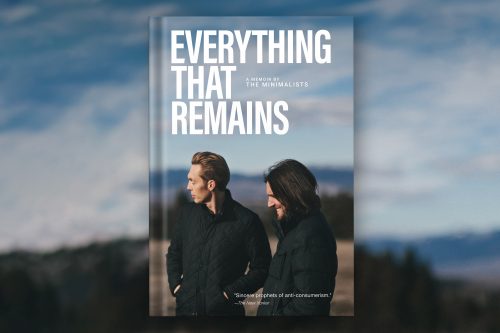
The tenth anniversary edition of our #1 bestselling book, Everything That Remains, enhanced with a beautiful new cover, is now available in paperback, ebook, and audiobook formats.

Synopsis

What if everything you ever wanted isn’t what you actually want? Twenty-something, suit-clad, and upwardly mobile, Joshua Fields Millburn thought he had everything anyone could ever want. Until he didn’t anymore.

Blindsided by the loss of his mother and his marriage in the same month, Millburn started questioning every aspect of the life he had built for himself.

Then, he accidentally discovered a lifestyle known as minimalism … and everything started to change.

In the pursuit of looking for something more substantial than compulsory consumption and the broken American Dream, Millburn jettisoned most of his material possessions, paid off loads of crippling debt, and walked away from his six-figure career.

So, when everything was gone, what was left? Everything That Remains is the touching, surprising story of what happened when one young man decided to let go of everything and begin living more deliberately. Heartrending, uplifting, and deeply personal, this engrossing memoir is peppered with insightful (and often hilarious) interruptions by Ryan Nicodemus, Millburn’s best friend of twenty years.

Available formats: Paperback · Kindle · Audiobook

Subscribe to The Minimalists via email.

The post Everything Is Final appeared first on The Minimalists.

  •